

What Is Business Card Management Software?
What Is Business Card Management Software? | Centralized Ordering, Approval Workflows & Integrations
Manual business card ordering through emails, spreadsheets, and scattered vendors leads to inconsistent branding, approval delays, and extra admin work. This video explains what business card management software is and how it centralizes ordering, approvals, and templates with automated workflows and connections to HRIS, CRM, and ERP systems. Learn what to look for when choosing a platform for your organization.
Introduction
Business card management software is an enterprise platform designed to centralize and control business card ordering, approvals, templates, and operational workflows across organizations. Instead of relying on disconnected vendors, email approvals, spreadsheets, or manual ordering processes, enterprises use centralized systems to standardize execution and improve governance visibility.
As organizations scale, manual ordering workflows become increasingly difficult to manage. Enterprise teams need systems that automate approvals, connect with HRIS and procurement platforms, and maintain brand consistency across departments and locations.
Why Enterprises Use Business Card Management Software
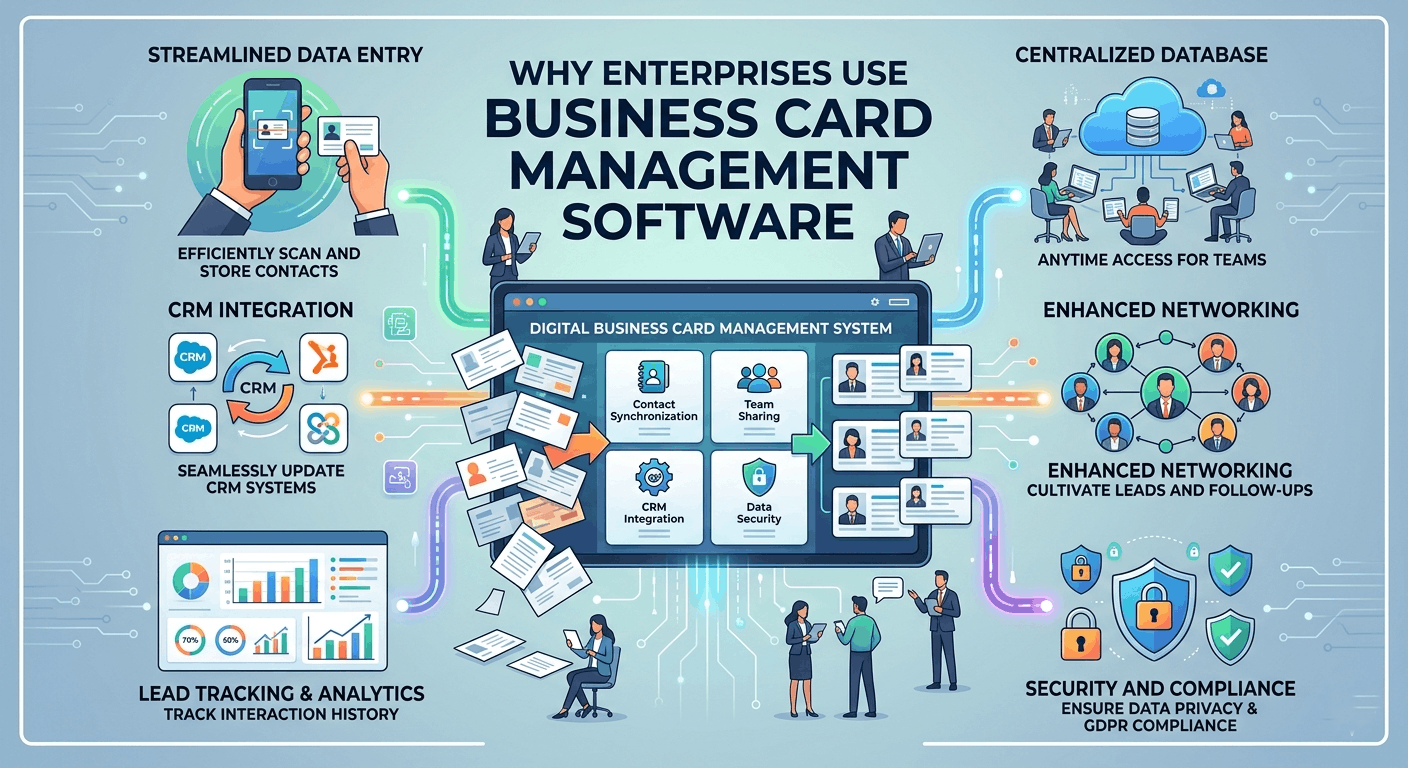
Business card ordering may appear operationally simple, but enterprise environments introduce complexity through approvals, procurement requirements, branding standards, multiple departments, and distributed teams. Without centralized systems, organizations often experience inconsistent processes, ordering delays, and reduced visibility.
Business card management software introduces governance and automation into the ordering lifecycle. This helps enterprises reduce manual coordination while improving operational consistency.
The Problems With Manual Ordering Systems
Many organizations still rely on manual workflows for business card ordering. These processes frequently involve email chains, disconnected vendors, spreadsheets, or individual purchasing decisions.
Common operational issues include:
• Inconsistent branding across teams
• Delayed approval processes
• Limited procurement visibility
• Manual data entry errors
• Disconnected vendor coordination
• Lack of audit reporting
• Administrative inefficiencies
• Difficult onboarding workflows
As enterprise teams grow, these inefficiencies create operational friction and governance challenges.
Core Functions of Business Card Management Software
Modern enterprise platforms provide significantly more than simple ordering functionality. Business card management software supports workflow execution, governance enforcement, integrations, and procurement coordination.
Core capabilities typically include:
• Centralized ordering systems
• Approval workflow automation
• Role-based access controls
• Template management
• Brand governance enforcement
• HRIS integrations
• CRM integrations
• ERP and procurement workflows
• Reporting and audit visibility
• Multi-location management
How Approval Workflows Improve Operational Control
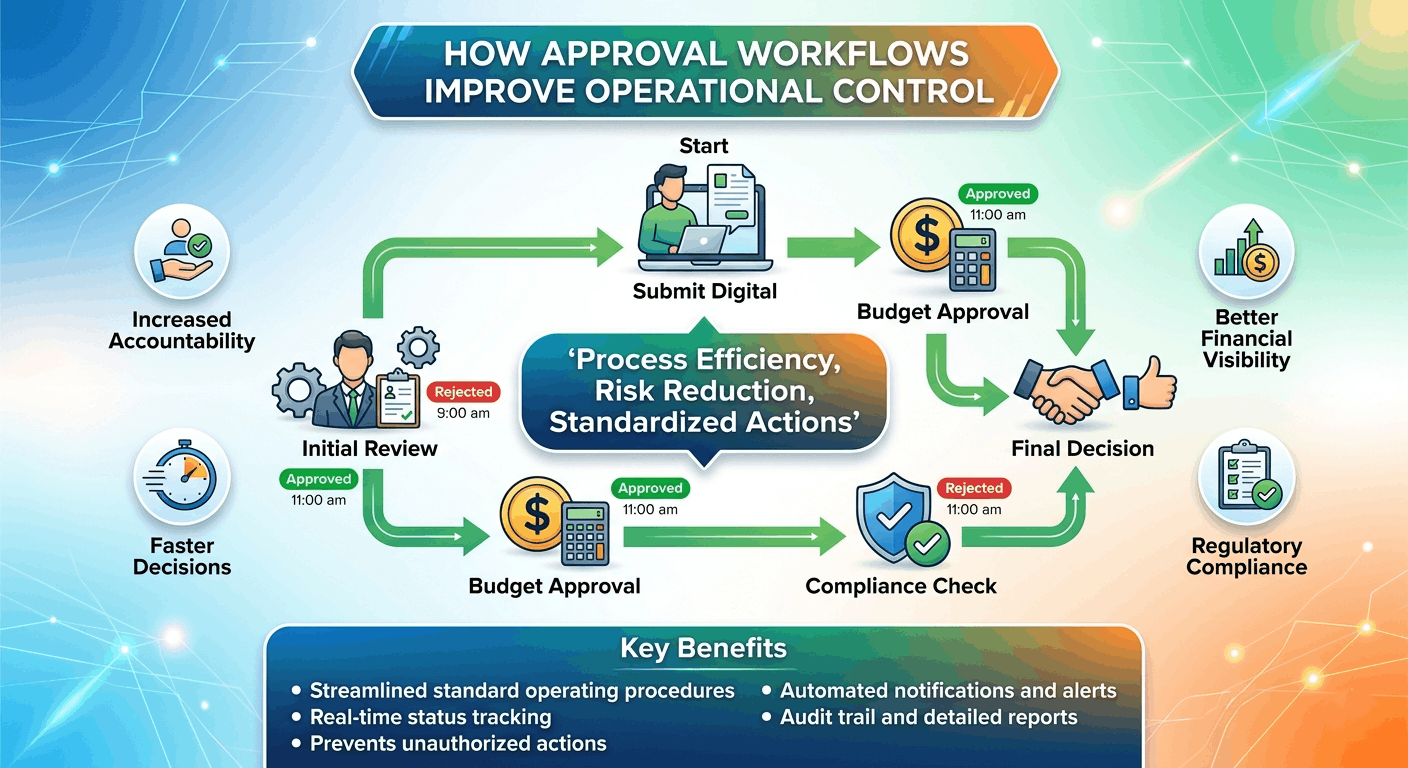
Approval workflows are one of the most important components of enterprise business card software. Instead of routing requests manually, organizations can automate approval paths based on department structures, roles, locations, or procurement rules.
This helps enterprises:
• Standardize ordering processes
• Reduce approval delays
• Improve procurement oversight
• Maintain compliance with internal policies
• Increase operational visibility
• Eliminate manual coordination
The Role of Integrations in Enterprise Systems
Enterprise organizations require business card management software that connects with existing infrastructure. Integrations improve automation while reducing administrative workload.
Examples include:
• HRIS integrations to synchronize employee information
• CRM integrations for sales and customer-facing teams
• ERP integrations for purchasing and procurement workflows
• API connectivity for workflow automation
These integrations help enterprises scale ordering processes more efficiently.
How BCM Supports Enterprise Workflow Execution
BCM provides a centralized enterprise platform designed specifically for operational governance and workflow execution. The platform helps organizations standardize business card ordering while improving approval control, procurement visibility, and integration management.
BCM supports:
• Centralized enterprise ordering
• Automated approval routing
• Governance and template control
• Enterprise integrations
• Procurement workflow coordination
• Multi-team scalability
• Reporting and operational visibility
What Enterprises Should Look For in a Platform
When evaluating business card management software, enterprises should focus on long-term scalability and governance capabilities.
Important evaluation criteria include:
• Workflow automation flexibility
• Integration architecture
• Administrative controls
• Procurement visibility
• Reporting functionality
• Multi-location support
• Template governance
• Vendor coordination capabilities
• Security and permissions management
Conclusion
Business card management software has become an important operational layer for enterprise organizations. Modern platforms improve governance, automate approvals, centralize ordering, and integrate with enterprise systems to reduce manual workload and operational inefficiencies.
BCM helps organizations standardize business card management through centralized workflows, approval automation, and enterprise integrations designed specifically for scalable operational execution.