

Choosing the Right Enterprise Business Card Management Platform: A Complete Evaluation Framework
Introduction
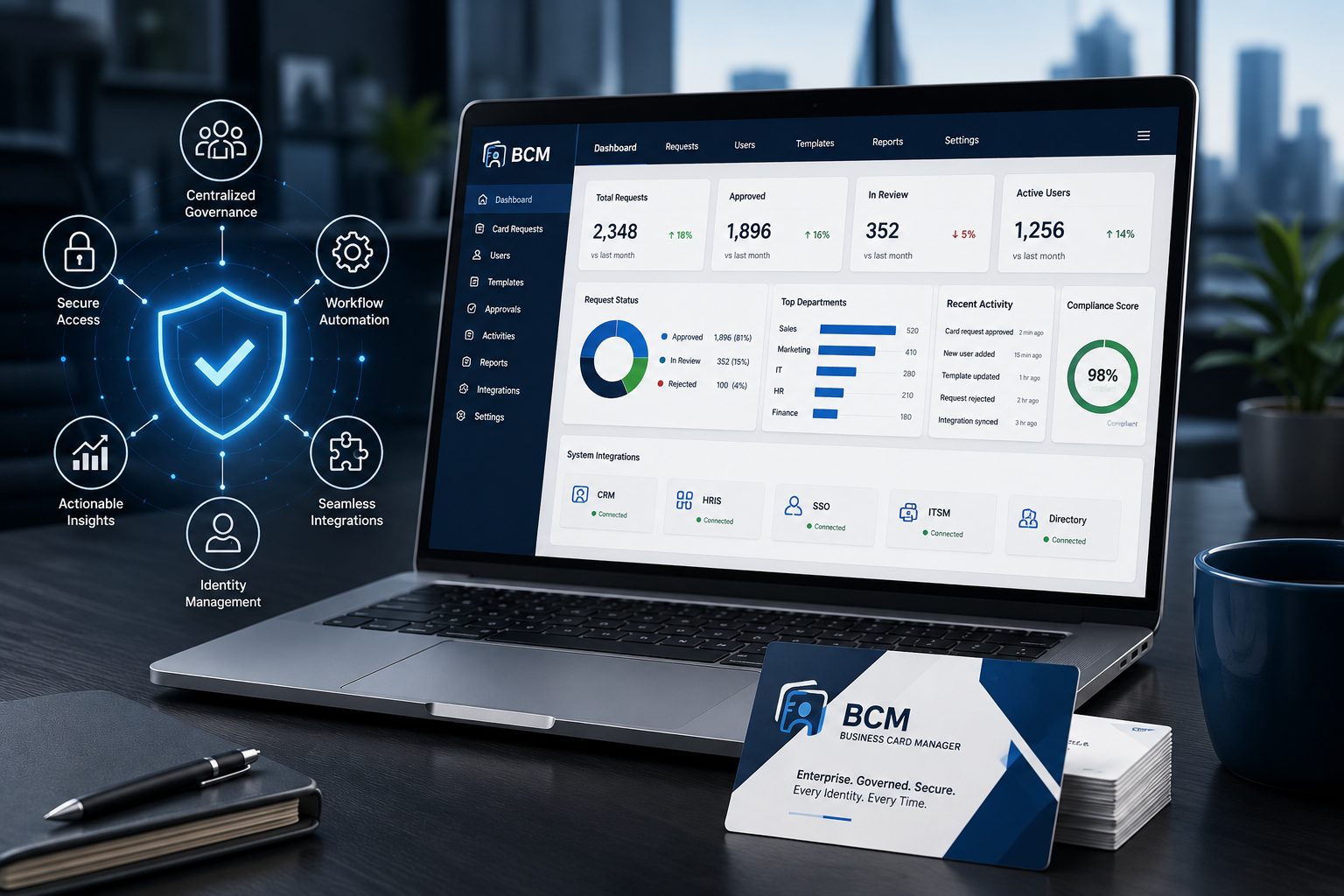
Enterprise organizations have outgrown traditional business card ordering methods. Modern enterprises require centralized control, governed approval workflows, enterprise integrations, reporting, and operational visibility. Selecting the right platform is no longer about choosing a print supplier; it is about choosing workflow infrastructure that supports digital operations.
Enterprise buyers should evaluate each capability based on long-term business value, governance maturity, scalability, employee experience, and its ability to integrate seamlessly with existing enterprise technology investments.
Why Enterprise Evaluation Is Different
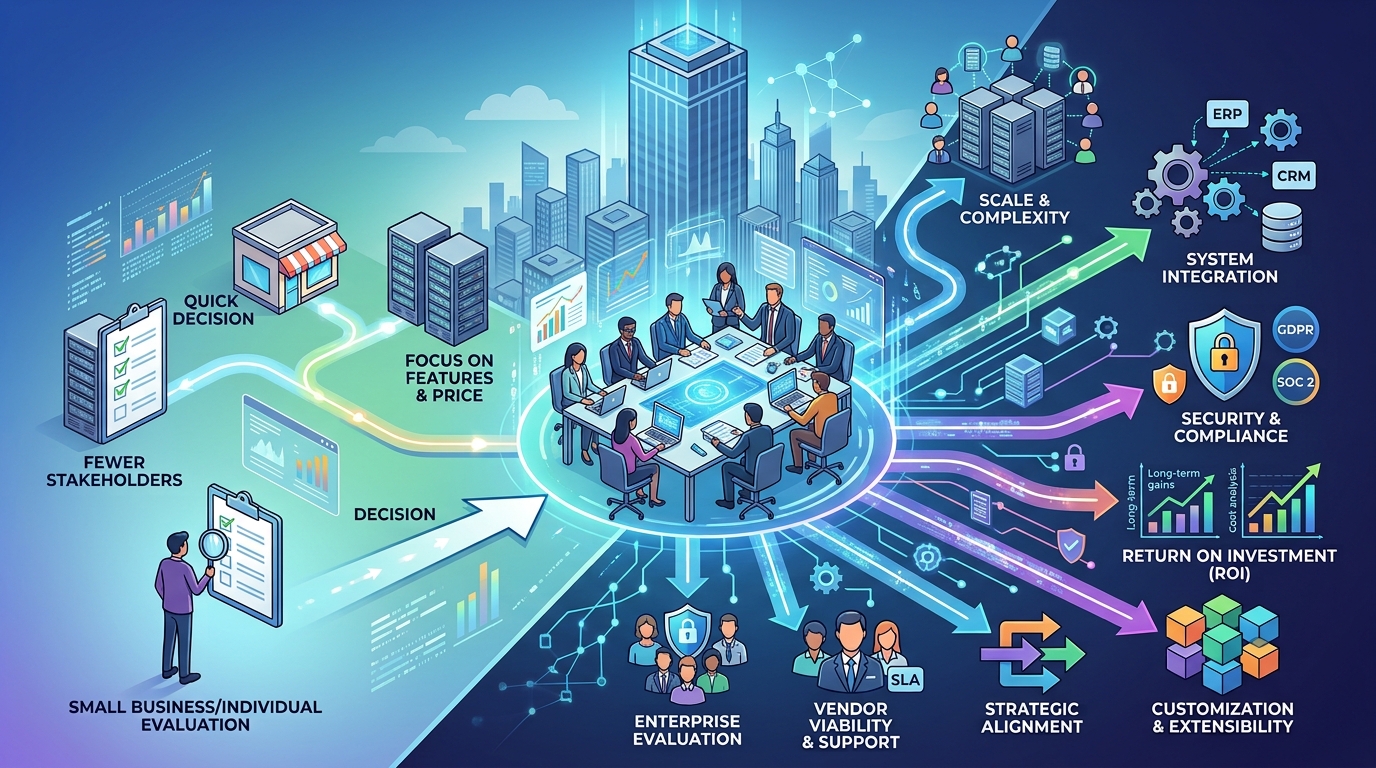
Unlike small organizations, enterprises must evaluate governance, scalability, security, integration maturity, and reporting. Decision makers should consider how the platform supports employee lifecycle events, multi-location administration, and policy enforcement while reducing manual work.
Enterprise buyers should evaluate each capability based on long-term business value, governance maturity, scalability, employee experience, and its ability to integrate seamlessly with existing enterprise technology investments.
Core Platform Capabilities
Essential capabilities include centralized ordering, configurable approval workflows, template governance, role-based permissions, vendor coordination, multi-location administration, audit trails, reporting dashboards, and API connectivity. These capabilities improve consistency while supporting enterprise growth.
Enterprise buyers should evaluate each capability based on long-term business value, governance maturity, scalability, employee experience, and its ability to integrate seamlessly with existing enterprise technology investments.
API Integration and Workflow Automation
API integration connects the platform with HRIS, ERP, procurement, identity, and CRM systems. Trusted employee data automatically flows into the ordering process, reducing duplicate entry and improving accuracy. Workflow automation accelerates approvals, improves employee onboarding, and reduces administrative overhead.
Enterprise buyers should evaluate each capability based on long-term business value, governance maturity, scalability, employee experience, and its ability to integrate seamlessly with existing enterprise technology investments.
Governance, Reporting, and Operational Visibility
Enterprise platforms should provide audit trails, approval history, procurement analytics, order tracking, vendor performance metrics, and compliance reporting. These insights help leadership improve processes, manage suppliers, and measure operational performance.
Enterprise buyers should evaluate each capability based on long-term business value, governance maturity, scalability, employee experience, and its ability to integrate seamlessly with existing enterprise technology investments.
Implementation Guidance
Successful implementations begin with assessing existing workflows, defining governance policies, integrating enterprise systems, piloting the solution, and monitoring KPIs. Organizations that combine governance with automation achieve faster adoption and more sustainable operational improvements.
Enterprise buyers should evaluate each capability based on long-term business value, governance maturity, scalability, employee experience, and its ability to integrate seamlessly with existing enterprise technology investments.
Why BCM
Business Card Manager (BCM) is designed to execute enterprise business card workflows. It centralizes ordering, supports configurable approvals, integrates with enterprise systems, and complements CCA’s governance-first architecture. Together with BOC’s operational strategy, BCM helps organizations modernize business card operations as part of a broader digital transformation initiative.
Enterprise buyers should evaluate capabilities based on long-term value, governance, scalability, employee experience, and integration.
FAQ
Enterprise platforms differ from print vendors by managing workflows, approvals, governance, integrations, and reporting. Centralized ordering improves consistency and operational visibility, while API integration ensures employee information remains synchronized across enterprise systems.
Evaluate capabilities based on business value, governance, scalability, employee experience, and integration.