

Business Card Workflow Infrastructure for Companies With Proprietary Systems
Introduction
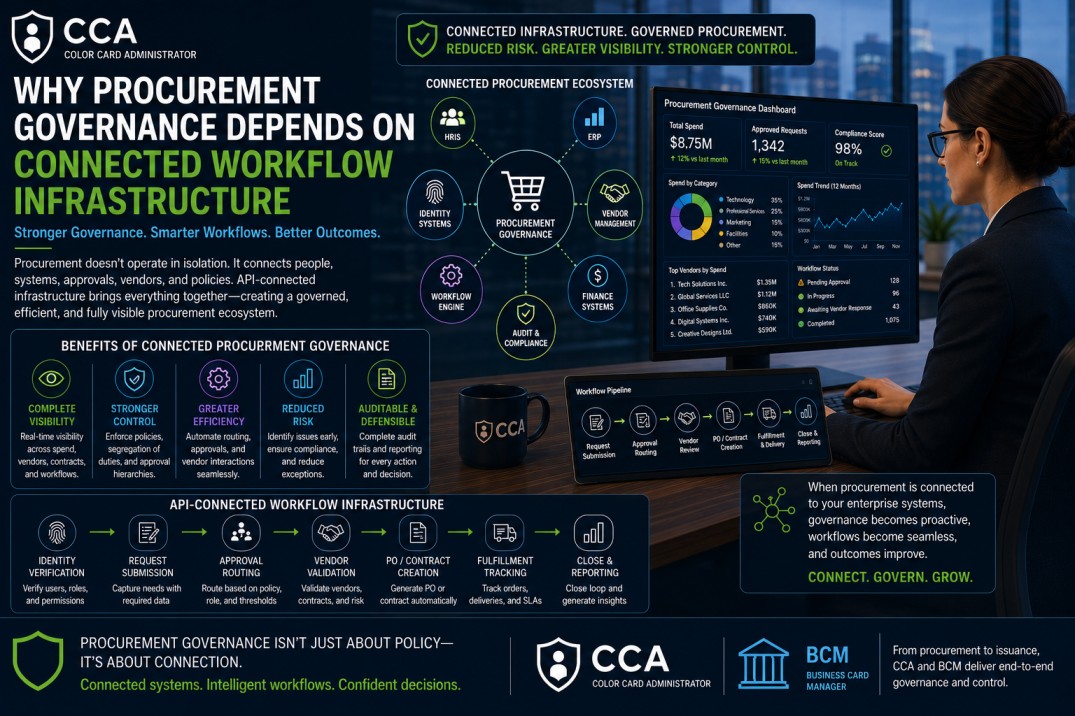
Many enterprise organizations operate complex technology environments that include proprietary applications, custom databases, internally developed systems, specialized workflows, and unique operational processes. While commercial platforms often support standard integrations with HRIS, CRM, ERP, and procurement systems, many enterprises require business card workflow infrastructure capable of integrating with proprietary technology ecosystems.
Traditional business card ordering platforms are often designed as standalone applications with limited flexibility. This creates challenges for organizations that require business card workflows to interact with custom onboarding processes, internal approval systems, proprietary identity management environments, operational reporting platforms, and specialized procurement workflows.
Business Card Manager (BCM) provides API-connected workflow infrastructure designed to support integration with both standard enterprise applications and proprietary systems. This flexibility enables organizations to create connected business card workflows that align with existing operational environments rather than forcing organizations to redesign established processes.
For medium, large, and enterprise organizations, Business Card Manager helps turn business card ordering into a more controlled workflow. Teams can manage employee requests, approval routing, brand standards, order activity, reporting, and fulfillment visibility in one connected environment.
Why Proprietary System Integration Matters
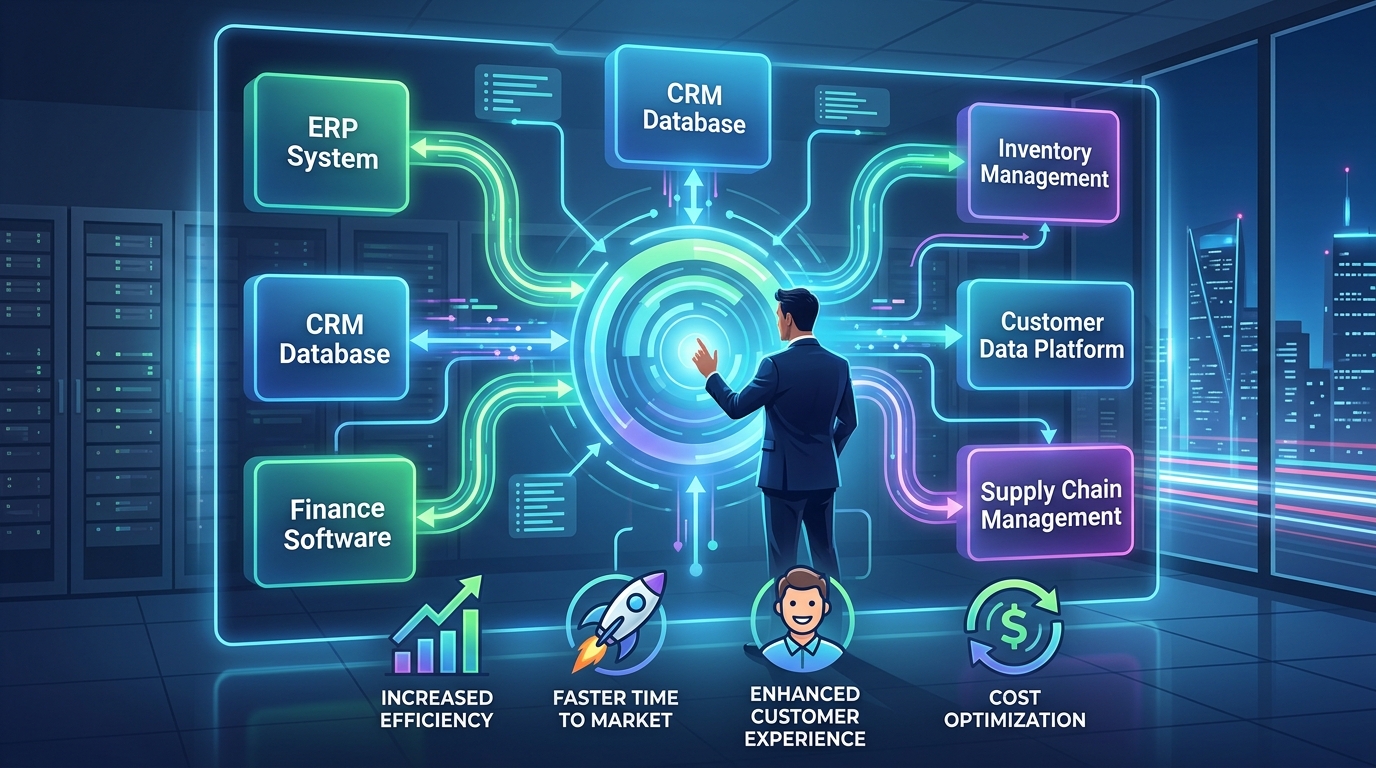
Enterprise organizations invest heavily in proprietary technology environments. These systems often support critical operational functions including employee lifecycle management, compliance workflows, procurement governance, financial controls, reporting infrastructure, and operational automation.
When business card management systems cannot integrate with proprietary environments, organizations frequently rely on manual workarounds, duplicate data entry, disconnected reporting, and fragmented approval processes. These inefficiencies increase administrative overhead while reducing visibility and governance control.
The Challenges of Isolated Business Card Systems
Isolated systems create operational silos that make workflow coordination difficult. Employees must manually submit information, administrators must manage approvals separately, and reporting data becomes fragmented across multiple platforms.
As organizations grow, these challenges become more significant. Teams spend time coordinating workflows manually rather than focusing on strategic initiatives. Data accuracy decreases while operational complexity increases.
API-Connected Workflow Infrastructure
API-connected workflow infrastructure provides the flexibility required to support proprietary integration requirements. Rather than limiting organizations to predefined workflows, API-based architectures allow business card operations to connect directly with custom applications and enterprise-specific processes.
This approach helps organizations maintain existing operational investments while improving workflow automation and visibility.
Common Proprietary Integration Scenarios
Enterprise organizations frequently integrate business card workflows with:
- Custom employee onboarding systems
- Internal identity management platforms
- Proprietary approval workflows
- Enterprise reporting environments
- Internal procurement applications
- Compliance management systems
- Custom operational dashboards
- Industry-specific business applications
These integrations help organizations create seamless workflow experiences across operational environments.
How BCM Supports Proprietary Systems
Business Card Manager is designed to support flexible integration strategies through API-connected workflow infrastructure. BCM enables organizations to connect employee data, approval processes, procurement activity, operational reporting, and fulfillment workflows with proprietary business systems.
This flexibility helps organizations centralize business card operations while maintaining alignment with existing enterprise technology strategies.
Operational Visibility Across Custom Environments
One of the biggest advantages of connected infrastructure is operational visibility. BCM enables organizations to surface workflow activity within existing reporting environments, helping stakeholders monitor requests, approvals, onboarding activity, fulfillment status, procurement coordination, and governance controls.
This visibility improves accountability and supports stronger operational decision-making.
Governance and Compliance Benefits
Connected workflow infrastructure also improves governance by ensuring business card operations follow established enterprise controls. Organizations can enforce approval requirements, maintain audit visibility, support procurement accountability, and align business card workflows with broader compliance frameworks.
For highly regulated industries, this capability is particularly important.
What Enterprise Buyers Should Evaluate
Organizations evaluating workflow infrastructure for proprietary environments should assess:
- API flexibility
- Integration architecture
- Security controls
- Workflow automation capabilities
- Governance support
- Reporting visibility
- Scalability
- Support for custom development requirements
The ability to integrate with proprietary systems should be viewed as a strategic requirement for many enterprise organizations.
How BCM Fits Into the Enterprise Ecosystem
Within the broader enterprise ecosystem, BCM serves as the execution layer responsible for operational business card workflows. BCM integrates with governance frameworks supported by CCA and operational infrastructure strategies discussed by BOC.
This positioning allows organizations to connect governance, operational visibility, workflow automation, and execution within a unified enterprise model.
API-Integrated Enterprise Business Card Printing and Management
Within API-Integrated Enterprise Business Card Printing and Management, Business Card Manager helps organizations manage business card ordering, approvals, reporting, procurement visibility, and fulfillment through a connected operating platform.
Conclusion
Organizations with proprietary systems require business card workflow infrastructure capable of integrating with existing technology investments. API-connected workflow infrastructure enables enterprises to automate workflows, improve visibility, strengthen governance, and support operational scalability without disrupting established business processes.
Business Card Manager provides the flexibility needed to connect business card operations with proprietary systems while maintaining enterprise governance, operational visibility, and workflow efficiency.
Schedule a BCM demo to learn how API-connected workflow infrastructure can integrate business card operations with proprietary systems, enterprise applications, governance controls, and operational reporting environments.