

Enterprise vs SMB Business Card Solutions
Introduction
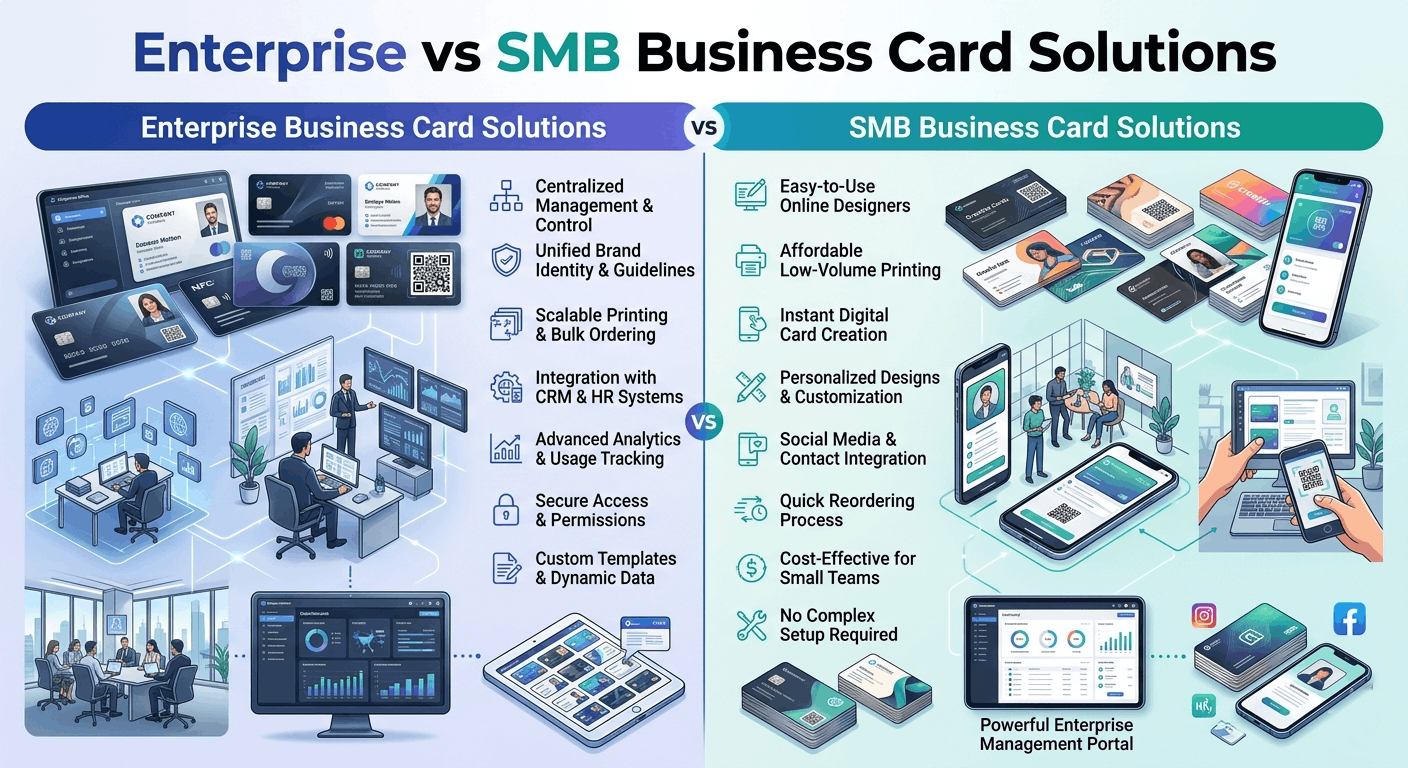
Enterprise business card software is designed to support governance, operational scalability, integrations, and approval workflows across large organizations. In contrast, SMB business card solutions typically focus on simpler ordering experiences with limited workflow controls and reduced administrative visibility.
As organizations grow, operational requirements become significantly more complex. Enterprises require centralized systems capable of supporting procurement oversight, integrations, approval routing, template governance, reporting visibility, and multi-location execution. Business card management evolves from a simple ordering activity into a coordinated operational process connected to broader enterprise infrastructure.
Understanding the differences between enterprise and SMB solutions is critical when evaluating long-term operational scalability. While SMB platforms may initially appear sufficient for smaller teams, many organizations eventually discover that simplified systems cannot support the governance, workflow coordination, and administrative oversight required in enterprise environments.
Why Enterprise Requirements Are Different
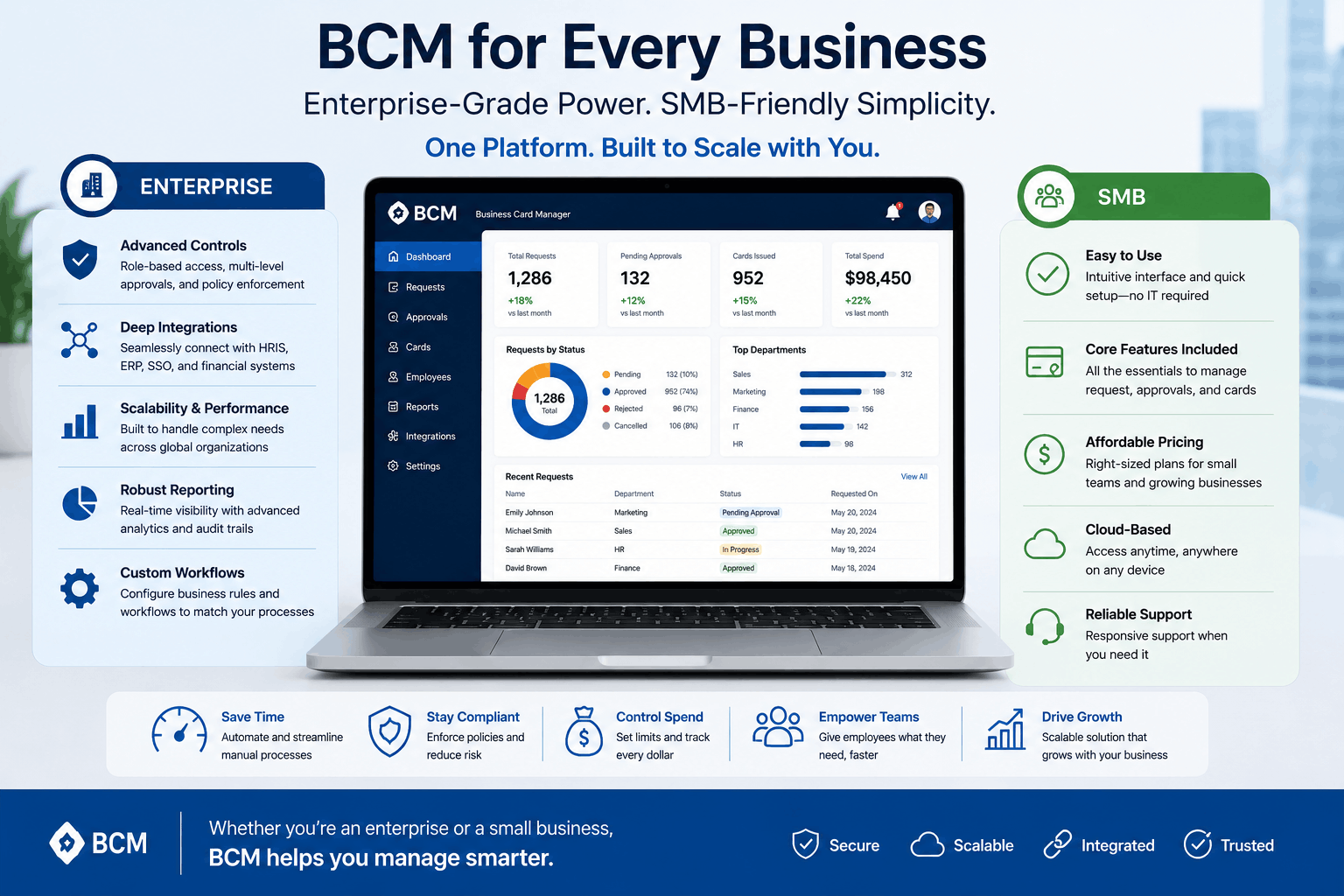
Enterprise organizations operate across multiple departments, approval structures, procurement environments, business units, and geographic regions. In these environments, business card ordering is no longer a standalone purchasing task. Instead, it becomes part of broader operational governance, identity execution, onboarding coordination, and procurement workflow management.
Enterprise teams require systems that can:
- Centralize ordering workflows
- Automate approvals
- Enforce governance policies
- Integrate with HRIS, CRM, and ERP systems
- Maintain procurement visibility
- Scale operationally across departments and locations
- Support role-based permissions
- Improve reporting visibility
Without centralized governance infrastructure, organizations often struggle with fragmented workflows, inconsistent templates, approval delays, and limited visibility into operational activity.
How SMB Solutions Typically Operate
SMB business card solutions are generally designed for smaller organizations with limited operational complexity. These systems typically prioritize convenience, speed, and ease of use over governance infrastructure and workflow scalability.
Common SMB characteristics include:
- Simple ordering portals
- Minimal approval workflows
- Limited administrative controls
- Basic template management
- Few integration capabilities
- Reduced procurement oversight
- Limited workflow customization
- Simplified reporting functionality
While these systems may work effectively for smaller teams, they often become difficult to scale as organizations expand operationally. Manual coordination increases, administrative visibility decreases, and governance consistency becomes harder to maintain across departments and locations.
Governance and Operational Control
One of the biggest differences between enterprise and SMB business card platforms is governance infrastructure.
Enterprise systems prioritize operational control through:
- Approval workflow automation
- Policy enforcement
- Role-based permissions
- Audit visibility
- Procurement controls
- Centralized administrative management
- Operational reporting
- Workflow standardization
Enterprise environments require systems capable of enforcing governance consistently across large operational ecosystems. Organizations need visibility into approvals, ordering activity, procurement coordination, and user permissions.
SMB systems often lack the workflow flexibility and operational visibility required for enterprise governance execution. As operational complexity increases, these limitations can create bottlenecks, inconsistencies, and administrative inefficiencies.
Integration Capabilities
Enterprise organizations require integrations that connect business card workflows with broader operational infrastructure. Business card management rarely functions independently in enterprise environments. Instead, it interacts with onboarding systems, procurement workflows, identity management platforms, and organizational reporting systems.
Enterprise integration environments commonly include:
- HRIS platforms
- CRM systems
- ERP procurement environments
- Identity management systems
- API automation workflows
- Approval routing systems
SMB solutions frequently offer limited integration support, which can create disconnected workflows and additional administrative overhead as organizations scale.
Integrated enterprise systems improve operational consistency by ensuring employee data, approvals, templates, and procurement workflows remain synchronized across platforms.
Workflow Automation Differences
Workflow automation is another major distinction between enterprise and SMB solutions.
Enterprise platforms support:
- Multi-step approval routing
- Department-specific rules
- Procurement coordination
- Automated notifications
- Compliance enforcement
- Audit reporting
- Workflow orchestration
- Escalation management
These automation capabilities improve operational efficiency while reducing manual administrative workload. Enterprise organizations benefit from standardized workflows that operate consistently across departments and locations.
SMB systems typically provide simplified workflows with fewer governance controls and limited operational flexibility, making them less suitable for highly structured enterprise environments.
How BCM Supports Enterprise Operations
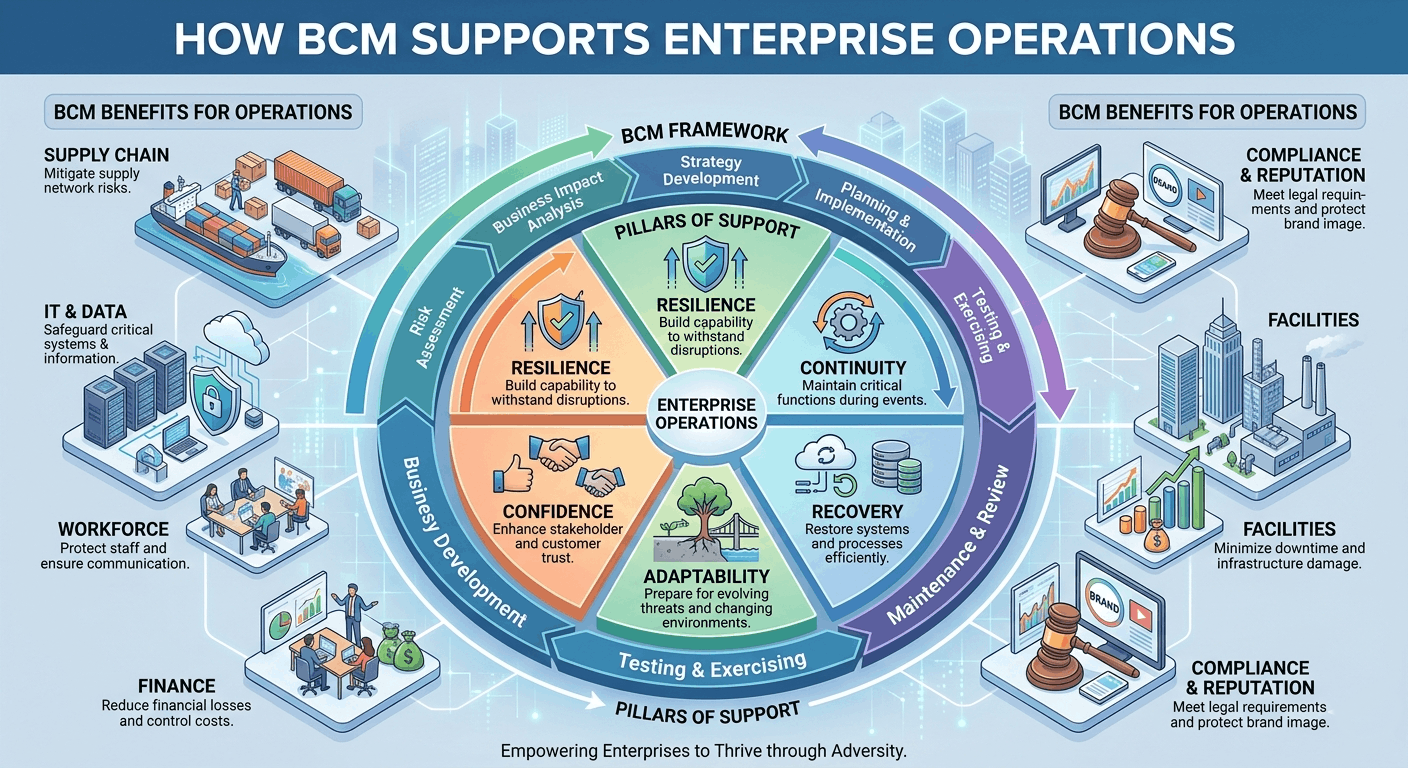
BCM is designed specifically for enterprise operational execution. The platform centralizes ordering workflows while improving governance visibility, approval automation, procurement coordination, and integration management across complex enterprise environments.
BCM enables enterprises to:
- Standardize business card ordering
- Automate approval workflows
- Integrate with enterprise systems
- Maintain governance enforcement
- Improve operational reporting
- Scale workflows across departments and regions
- Reduce manual administrative workload
- Improve operational visibility
This centralized infrastructure helps enterprises maintain consistency while supporting long-term operational scalability.
Scalability Considerations
Scalability is a critical evaluation factor for enterprise organizations. Platforms that work for smaller businesses often struggle to support complex operational environments with multiple teams, locations, approval structures, and procurement requirements.
Enterprise buyers should evaluate:
- Multi-location support
- Administrative scalability
- Workflow flexibility
- Integration architecture
- Procurement coordination
- Governance enforcement
- Reporting capabilities
- Role-based permissions
Organizations planning for long-term growth require systems capable of adapting to increasing operational complexity without sacrificing visibility or governance control.
Conclusion
Enterprise business card software differs significantly from SMB ordering solutions. While SMB systems focus primarily on simple ordering experiences, enterprise platforms must support governance, integrations, workflow automation, reporting visibility, and operational scalability.
BCM provides centralized enterprise infrastructure designed to improve governance visibility, automate operational workflows, standardize business card management, and support scalable operational execution across complex organizational environments.