

QuickBooks Online Business Card Ordering Integration For Expense Allocation and Reconciliation
Streamlining Business Card Expenses with Business Card Manager and QuickBooks Online Integration
The video introduces Business Card Manager (BCM) as a solution for managing business card expenses, a task that often seems straightforward but becomes complex when tracking order origin, approvals, production details, and cost allocation.
A governed model connecting approved employee identity-controlled ordering, supplier expense, and accounting closure.
QuickBooks Online can provide customers with vendors, products and services, account classes, locations, project transaction references, and financial status for business card activity. CCA governs eligibility and the identity approved for print. BCM converts that approved specification into a controlled order and returns production shipment delivery, cancellation, and reprint evidence. A dependable API integration for business card ordering connects these records without allowing an accounting code to authorize identity or a booked expense to substitute for production control.
QuickBooks Online Connects Accounting Visibility to Business Card Execution
Business card demand may begin with onboarding a role change a new office a customer assignment, an event, or an approved replenishment. The resulting transaction crosses employee data public identity brand templates quantities suppliers, delivery receipts bills expenses credits and cost allocation. When these steps are disconnected finance sees a charge but cannot readily prove who approved it what was produced where it was delivered or whether an exception was resolved.
A configured QuickBooks Online integration can connect the accounting side of that chain to BCM. Depending on the customer configuration it may exchange approved customer vendor item account class location project, or other tracking context plus bills expenses purchase orders payments credits and status. BCM contributes the order version proof release supplier production and fulfillment evidence that an accounting platform ordinarily does not maintain.
The systems retain distinct authority. QuickBooks Online governs accounting records and financial reporting. CCA governs who may receive a card and what identity and presentation may be printed. BCM governs product construction production release, supplier execution, fulfillment, and reorder control. BOC can coordinate cross system exceptions and closure where deployed.
A Stable Transaction Chain Makes Reconciliation Possible
A memo containing an employee name is not a reliable control. Every request should carry a stable correlation key linking the employee or approved recipient CCA business card identity version BCM order supplier event QuickBooks transaction shipment delivery credit and replacement. Native identifiers should remain intact so teams can move from an accounting entry to the exact approved order without manual name or amount matching.
The design must survive partial shipments cancellations duplicate notifications reprints consolidated supplier bills refunds and corrections. Idempotency prevents the same request from creating multiple orders or financial records. Version control shows which identity quantity supplier price allocation and delivery destination were valid when production was released.
A material change after approval can require a new identity decision, updated accounting context, a revised proof, or cancellation and replacement. The record should preserve the earlier state rather than silently overwriting it.
The Governed QuickBooks Online and BCM Workflow
| Stage | Governed action | Required evidence |
| Demand and eligibility | An approved workforce or commercial event establishes need | Candidate request with stable correlation |
| Identity authority | CCA approves name title entity brand language and contact details | Versioned identity specification |
| Accounting validation | QuickBooks context supplies valid customer vendor item account class location or project | Accountable financial destination |
| Order construction | BCM applies template product quantity proof supplier shipping and release rules | Executable order linked to approved identity |
| Fulfillment evidence | BCM records production shipment delivery cancellation and reprint status | Actual outcome remains visible |
| Financial closure | QuickBooks records the applicable bill expense payment credit and allocation | Authorized expected and actual results reconcile |
Accounting Dimensions Must Be Valid Before Release
The relevant allocation may involve an expense account class location project customer or another configured dimension. BCM should receive only the validated codes needed for the business card ordering for large companies and return them with the shared reference. Controlled values are preferable to free text because a valid code can be checked reported and retired consistently.
Validation must cover allowed combinations and effective state. A class can be active yet inappropriate for the selected location. A project may close while a request is pending. BOC or integration logic should stop the transaction identify the failed rule and route correction to the responsible owner rather than applying a convenient default.
Financial validity does not authorize printed identity. A valid account and project cannot approve an unverified title brand or contact detail. CCA resolves identity first, and BCM releases only when the identity, financial supplier product and approval states agree.
Items Vendors Bills and Expenses Need an Explicit Model
The integration requires a governed mapping between BCM card configurations and QuickBooks products services categories or accounts. Quantity finish language region supplier rush service delivery and tax can affect the commercial record. Mappings should be owned tested and versioned for every supported market.
Some organizations record a supplier bill and payment while others record an expense transaction or use purchase orders where supported by their process. The chosen model should reflect real commercial control and avoid inventing transactions solely to make integration appear complete. The record needs enough detail to reconcile supplier quantity price freight tax currency delivery and the BCM order reference without copying unrestricted artwork or unnecessary employee data into accounting.
Vendor changes and substitutions require policy. A different supplier may alter contract price material lead time delivery route tax or quality expectations. BCM should block or reroute the order until the commercial and production conditions are valid for the same version.
Production Release and Accounting Approval Are Separate
An approved bill purchase record or expense code does not by itself authorize production. BCM releases only when CCA identity approval product quantity supplier price timing delivery and required financial conditions are simultaneously valid. If an accounting validation is pending the order can remain prepared but unreleased.
The inverse is also true. Approved identity does not authorize unlimited quantity an off contract supplier rush freight or an invalid allocation. The production checkpoint brings identity and commercial authority together without confusing them.
If a rejection or material change occurs after production starts the case needs an accountable owner. The disposition may involve stopping production accepting completed work issuing a credit correcting allocation or creating a governed replacement. Each decision should remain attached to the original chain.
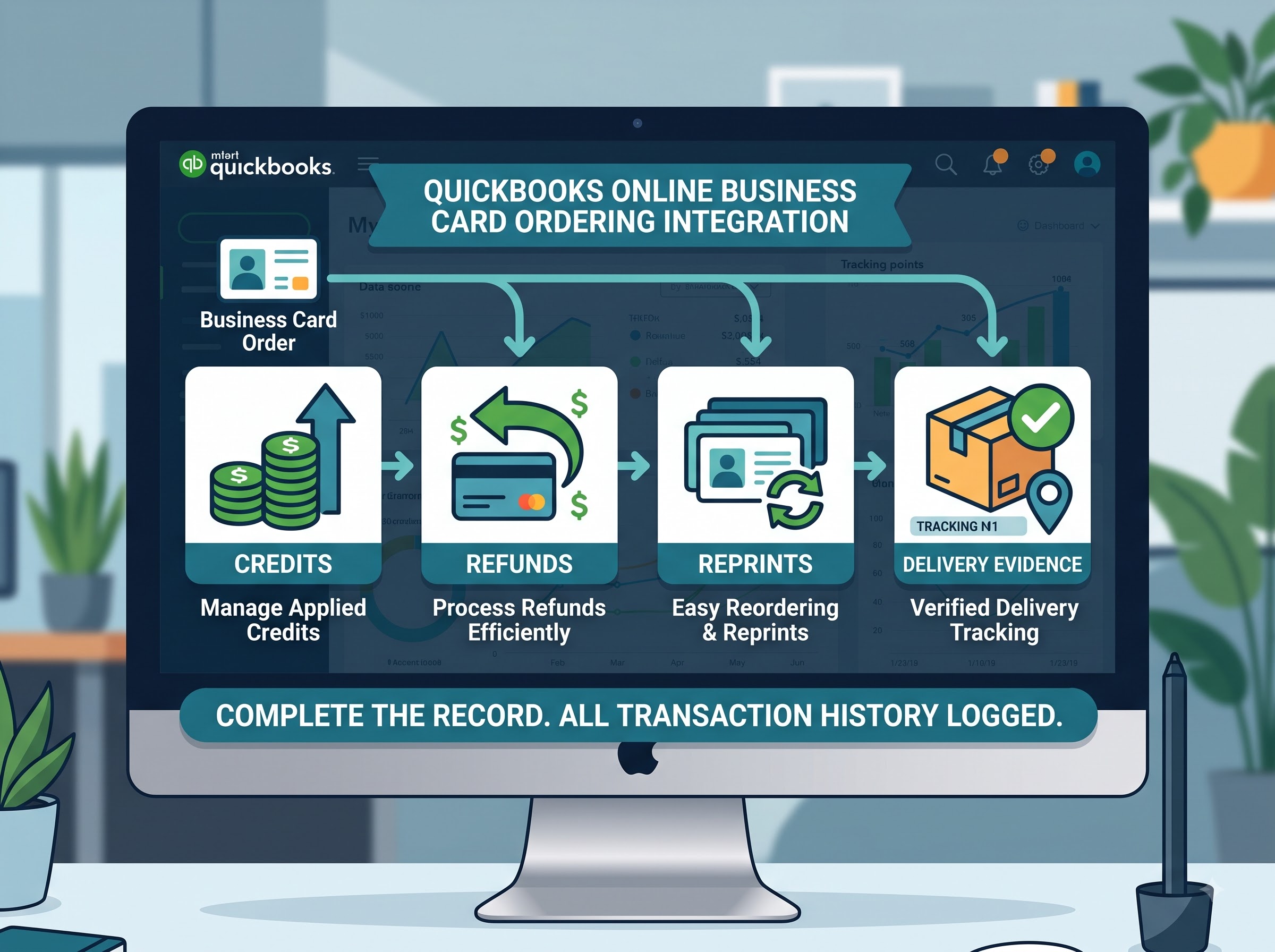
Credits Refunds Reprints and Delivery Evidence Complete the Record
A paid supplier charge can still represent a failed outcome. Cards may arrive late damaged at the wrong address or with a production defect. BCM supplies the fulfillment evidence needed to interpret the financial entry. Delivery confirmation may support closure for standard orders while executive regulated or high value requests may require named receipt.
Partial shipments should create partial operational evidence. Cancellations credits and refunds must reference the original request and reason. Reprints should distinguish supplier failure from an approved enterprise operational accountability change or a new business need. That distinction protects vendor performance reporting and prevents the organization from treating every replacement as fresh legitimate demand.
Reconciliation compares supplier amount item quantity tax freight currency reference allocation delivery outcome and credits. A variance receives an owner and permitted resolution. Closure occurs only when operational and financial records agree or an authorized disposition explains the difference.
API Security Reliability and Data Minimization Matter
The implementation may use approved QuickBooks Online APIs middleware scheduled exchanges or another controlled interface. Exact endpoints authentication scopes fields limits webhooks entitlements regional availability and customer configuration must be verified against current documentation. This article describes a recommended integration model and does not claim a released native BCM connector.
Use a dedicated integration identity minimum permissions protected credentials environment separation monitored failures and documented rotation. Exchange only fields required for the stated process. Payroll banking tax credential unrestricted artwork and unrelated employee data should remain outside the flow.
The design should tolerate duplicate and delayed events timeouts throttling unavailable systems and responses received out of order. Idempotency keys retry rules and reconciliation jobs prevent duplicate orders and financial entries. Failed transactions belong in an owned queue with enough context to correct the cause and resume from the controlled checkpoint.
Reporting Should Explain Why the Cost Occurred
QuickBooks Online can report expenditure by account vendor customer class location project period and configured dimensions. BCM can add request purpose card family quantity rush status cycle time delivery outcome cancellation reprint and exception cause. Together they explain the amount and the operational reason.
Higher spend may reflect growth new offices customer events acquisitions or role changes. Avoidable spend may reflect duplicate requests obsolete identity excess quantity invalid templates off contract buying delivery failure production defects or late cancellation. Reporting should separate legitimate demand from control failure so the responsible team can act.
Useful measures include straight through processing approval time correction rate duplicate prevention supplier use price variance delivery performance unmatched charges credits reprints and transactions closed with complete evidence.
Buyer Intent Bridge for QuickBooks Online Integration
Organizations evaluating a business card management platform should ask how it exchanges vendors items accounts classes locations projects transactions credits and status with QuickBooks Online. They should test correlation version control data minimization duplicate prevention partial fulfillment supplier changes exception ownership reconciliation and recovery after an outage.
Buyers should request a field map event model authority matrix security design retention rules and failure procedures. The evaluation should prove that QuickBooks accounting context cannot overwrite employee identity and that a financial record cannot release an unapproved production version.
Implementation Priorities
Begin with one business unit standard card family supplier currency allocation pattern transaction model delivery method and reconciliation process. Define authoritative systems identifiers item and vendor mappings approval states release conditions credit treatment access controls logging retention and exception ownership.
Test new hires title and location changes invalid accounts closed projects inactive vendors expired mappings high quantities rejected approvals supplier substitutions duplicate events partial shipments delivery failures cancellations refunds credits reprints and changes before and after production release. Expand after standard and exception paths both produce traceable evidence.
Frequently Asked Questions
Can QuickBooks Online initiate a business card order?
A configured event can prepare a request, but CCA must authorize identity and BCM must validate and release the matching production order.
Does an accounting approval authorize production?
No. It can establish financial authority, while BCM releases only after identity product quantity supplier timing delivery and approval conditions are valid for the same version.
How can the integration improve expense allocation?
QuickBooks Online can provide controlled account class location project customer vendor and item context. BCM returns the order and fulfillment evidence that explains the charge.
Does BCM provide a native QuickBooks Online connector?
This article describes a recommended integration model. Feasibility depends on current APIs authentication scopes entitlements transaction design supplier capabilities and the configured BCM and CCA environment.
Connect QuickBooks Online Accounting to Governed Business Card Ordering
Connect expense allocation and reconciliation to the order that produced the cost. Explore how Business Card Manager can connect approved identity QuickBooks Online accounting context supplier execution delivery evidence and financial closure. Request a BCM demonstration and integration fit discussion at https://www.businesscardmanager.com/