

Business Card Ordering Analytics: How Enterprise Reporting Improves Governance and Cost Control
Introduction
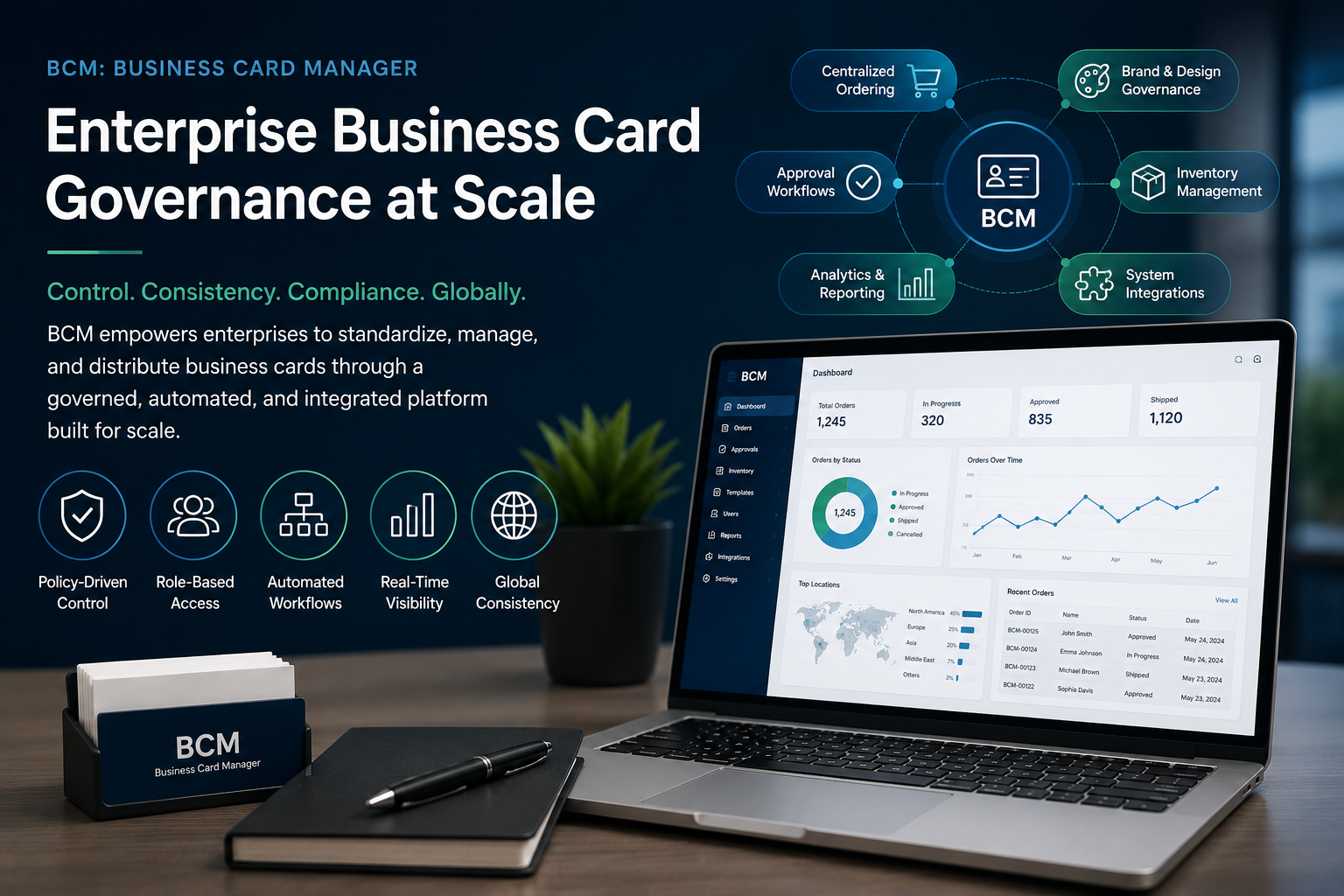
Business card programs generate valuable operational data, yet many organizations fail to use it strategically. Modern Business Card Manager (BCM) platforms transform every order, approval, template change, and fulfillment event into actionable intelligence. Instead of simply processing requests, BCM provides enterprise visibility into identity execution, policy compliance, spending trends, vendor performance, and operational efficiency.
Why Analytics Matter
Enterprise leaders need centralized visibility across departments, regions, subsidiaries, and vendors. Analytics identify approval bottlenecks, excessive ordering, inactive users, policy violations, and opportunities for cost optimization. BCM provides consistent enterprise-wide reporting that supports governance, scalability, brand consistency, and informed decision making across global operations.
Key Metrics
Track order volume, turnaround time, approval duration, spend by business unit, template utilization, shipping methods, reprint frequency, and vendor SLA performance. BCM provides consistent enterprise-wide reporting that supports governance, scalability, brand consistency, and informed decision-making across global operations.
Governance Benefits
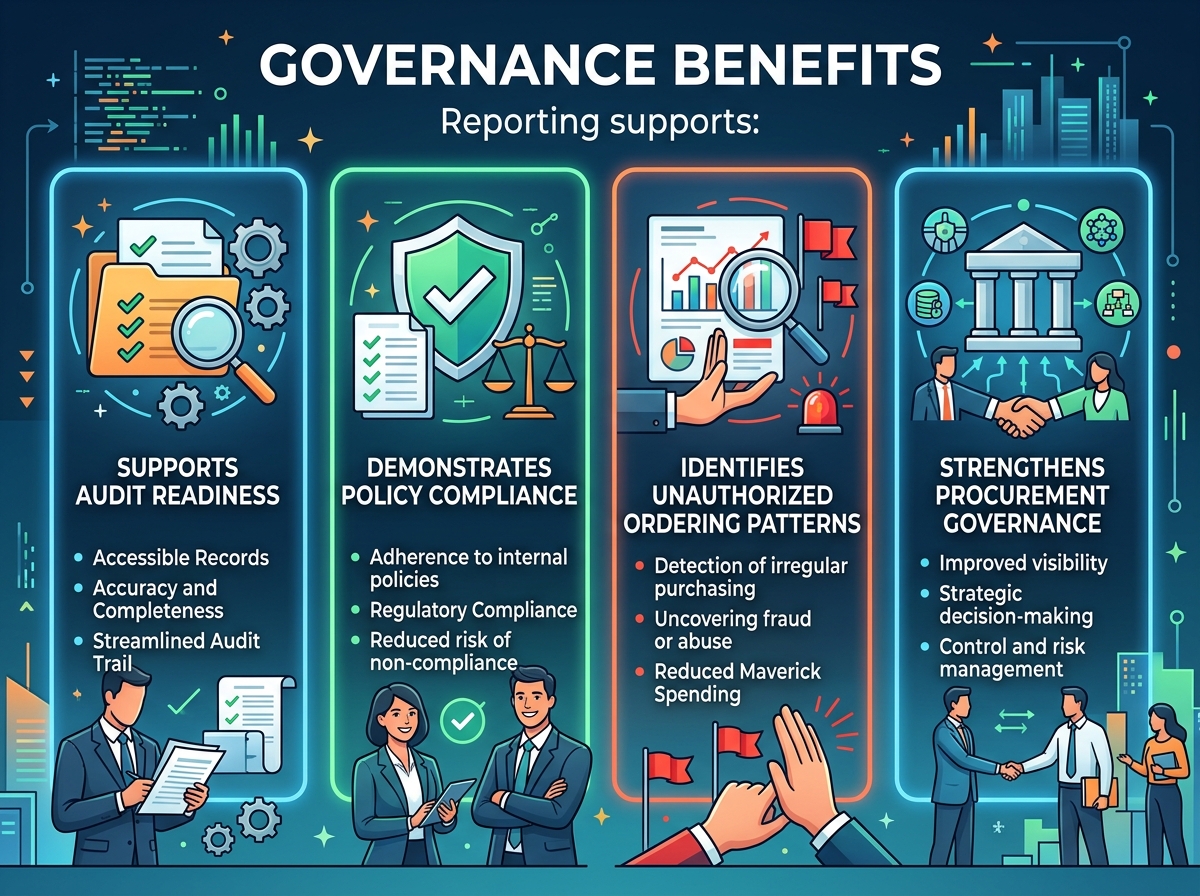
Reporting supports audit readiness, demonstrates policy compliance, identifies unauthorized ordering patterns, and strengthens procurement governance. BCM provides consistent enterprise-wide reporting that supports governance, scalability, brand consistency, and informed decision-making across global operations.
Cost Optimization
Historical analytics reveal waste, duplicate orders, excessive express shipping, and inventory opportunities that reduce long-term operational costs. BCM provides consistent enterprise-wide reporting that supports governance, scalability, brand consistency, and informed decision-making across global operations.
Executive Dashboards
Role-based dashboards allow HR, Procurement, IT, Brand Management, and leadership to access only the insights relevant to their responsibilities. BCM provides consistent enterprise-wide reporting that supports governance, scalability, brand consistency, and informed decision-making across global operations.
Integration
When integrated with HRIS, CRM, ERP, and identity systems, BCM analytics become part of enterprise operational reporting and digital transformation initiatives. BCM provides consistent enterprise-wide reporting that supports governance, scalability, brand consistency, and informed decision-making across global operations.
Best Practices
Define KPIs, standardize approval workflows, automate scheduled reports, review trends quarterly, and continuously improve policies using measurable outcomes. BCM provides consistent enterprise-wide reporting that supports governance, scalability, brand consistency, and informed decision-making across global operations.
Conclusion
Business card ordering analytics convert operational transactions into strategic enterprise intelligence. Organizations adopting BCM gain measurable visibility into governance, compliance, spending, and workflow performance while creating a scalable foundation for future growth.