

Enterprise Employee Onboarding Starts with Business Card Provisioning
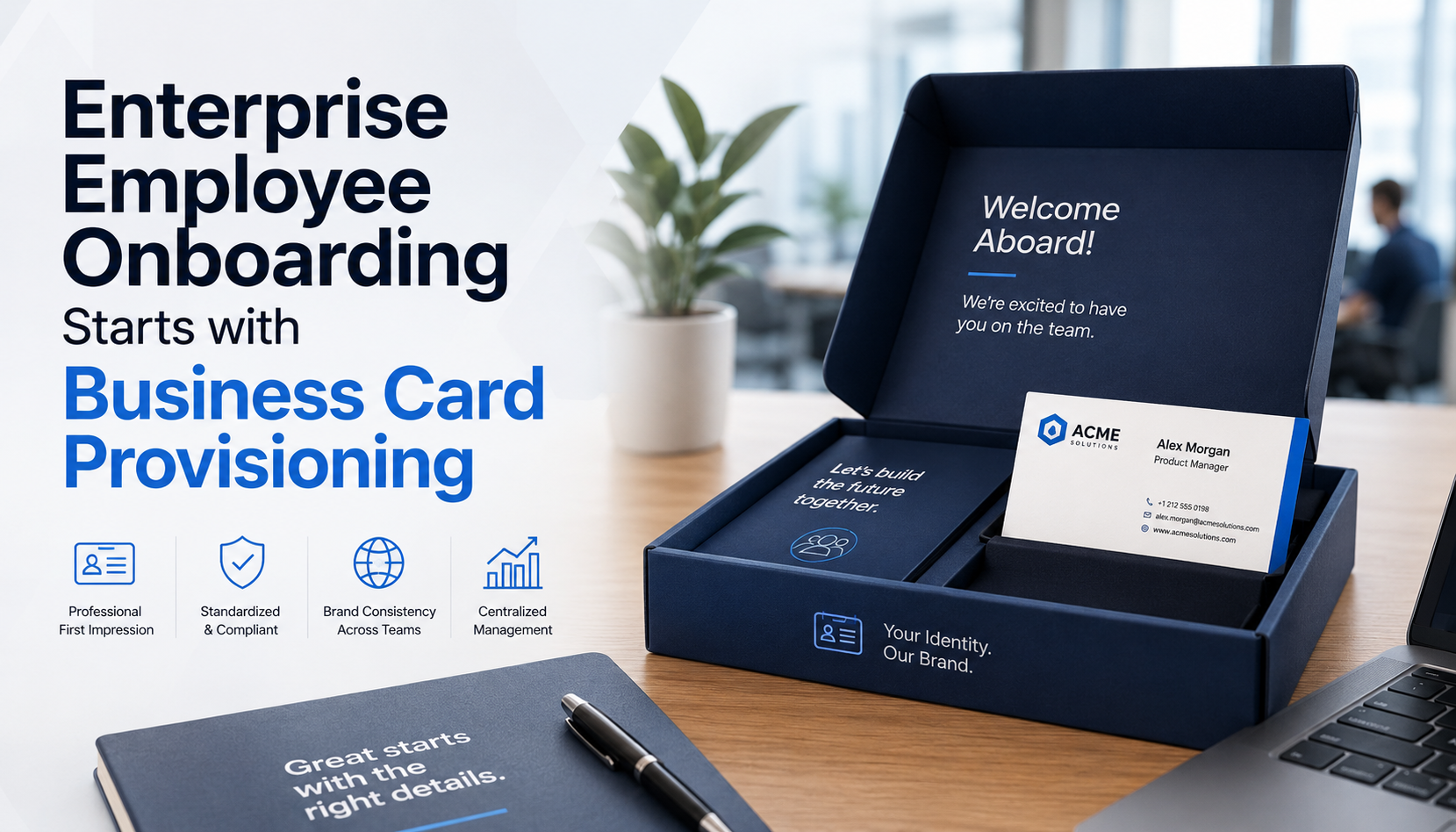
Employee onboarding is one of the most standardized processes inside modern enterprises. Human Resources creates employee records, IT provisions systems, Facilities grants access, and Finance assigns cost centers. Yet business card provisioning is often handled separately through emails, spreadsheets, and manual vendor communication.
Business cards are official representations of corporate identity. They communicate approved employee information, brand standards, office locations, and regulatory details. Treating them as simple print requests introduces governance gaps, delays, inconsistent branding, and unnecessary administrative work.
Business Card Manager (BCM) transforms business card provisioning into a governed enterprise workflow that integrates with onboarding, approval processes, employee data, and print fulfillment. Choosing the right Business Card Ordering Platform for Companies can simplify procurement, maintain brand consistency, and reduce administrative overhead.
Why Business Card Provisioning Matters
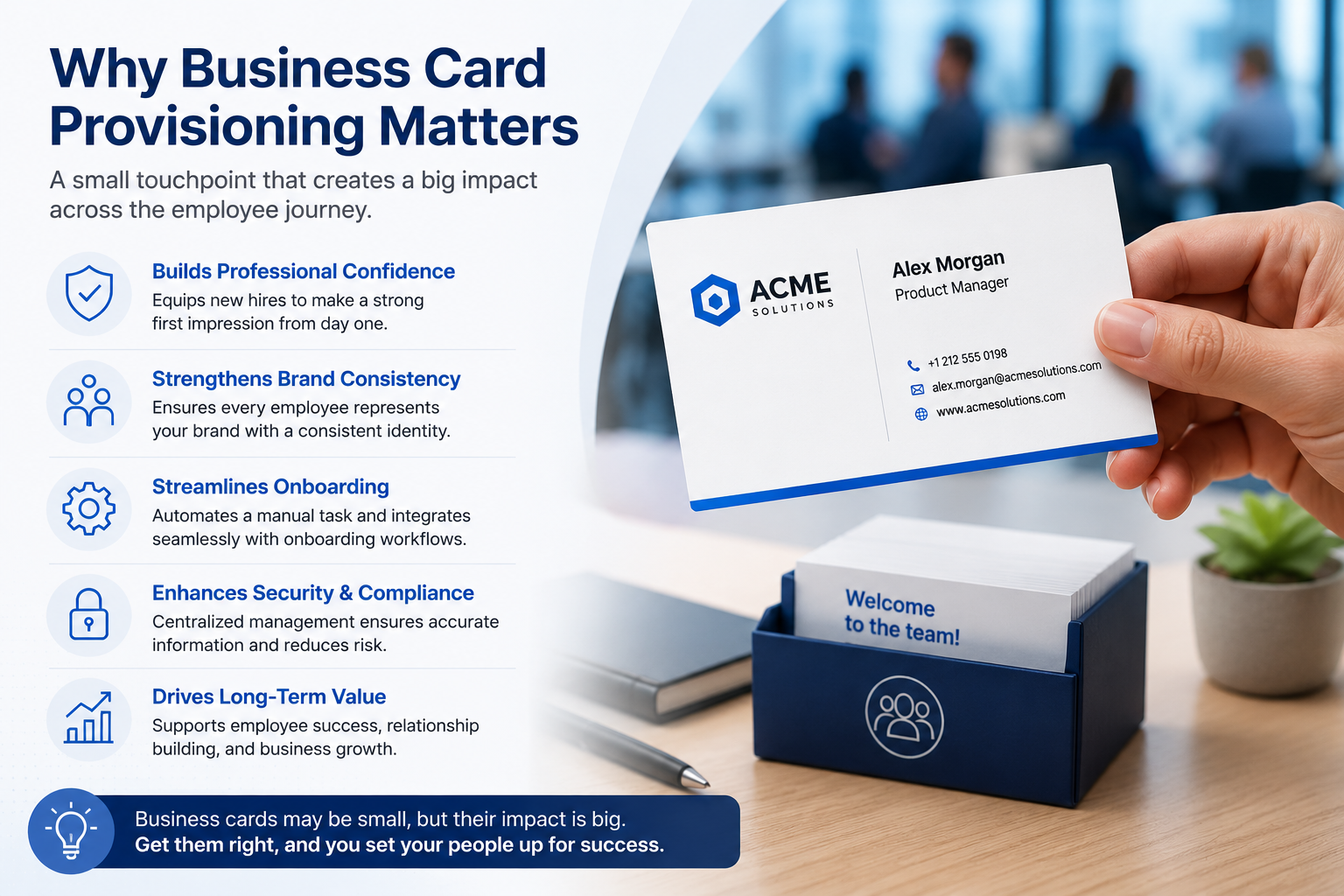
Business cards should be provisioned alongside email accounts, CRM access, ERP permissions, security credentials, and office access. Delayed business cards leave customer-facing employees without approved corporate identity assets during meetings, conferences, and partner engagements. Businesses focused on scalability should understand Why Enterprise Approval Workflows Are the Foundation of Operational Governance before implementing new ordering processes.
Integrating BCM into onboarding ensures new hires receive professionally governed business cards as part of their first-day readiness.
Centralized Governance and Automation
BCM eliminates duplicate data entry by synchronizing approved employee information from enterprise systems. Automated approval workflows route requests through managers, marketing, procurement, or regional administrators before production begins.
The platform enforces approved templates, regional branding, multilingual variations, compliance requirements, vendor routing, shipment tracking, audit history, and reporting. Organizations gain visibility into print volumes, onboarding completion, approval bottlenecks, vendor performance, and overall provisioning costs.
Comparing Centralized Business Card Ordering vs Manual Ordering can help organizations identify opportunities to improve efficiency and reduce errors.
Business Value
Business card provisioning becomes an enterprise identity workflow rather than a disconnected administrative activity. BCM supports hybrid workforces, multiple locations, and Salesforce integration while maintaining centralized governance. Many enterprises benefit from Business Card Manager Salesforce Integration to keep employee information accurate across business systems.
Organizations benefit from:
• Faster employee onboarding
• Consistent enterprise branding
• Reduced manual administration
• Improved compliance and auditability
• Accurate employee identity data
• Enterprise scalability
Investing in Employee Identity Lifecycle Management with CCA can reduce manual administration while improving data consistency across the organization.
Conclusion
Employee onboarding is complete only when employees receive both digital access and customer-facing identity assets. By integrating Business Card Manager into onboarding workflows, enterprises automate approvals, synchronize employee data, enforce brand standards, and streamline fulfillment. Business card provisioning becomes a governed operational process that strengthens enterprise identity, improves efficiency, and supports professional engagement from day one.
Modernize your employee onboarding with Business Card Manager (BCM). Automate business card provisioning, approvals, branding, and fulfillment through a centralized governance platform that ensures every employee represents your organization consistently from day one.