

HRIS Integration for Business Card Management
Introduction
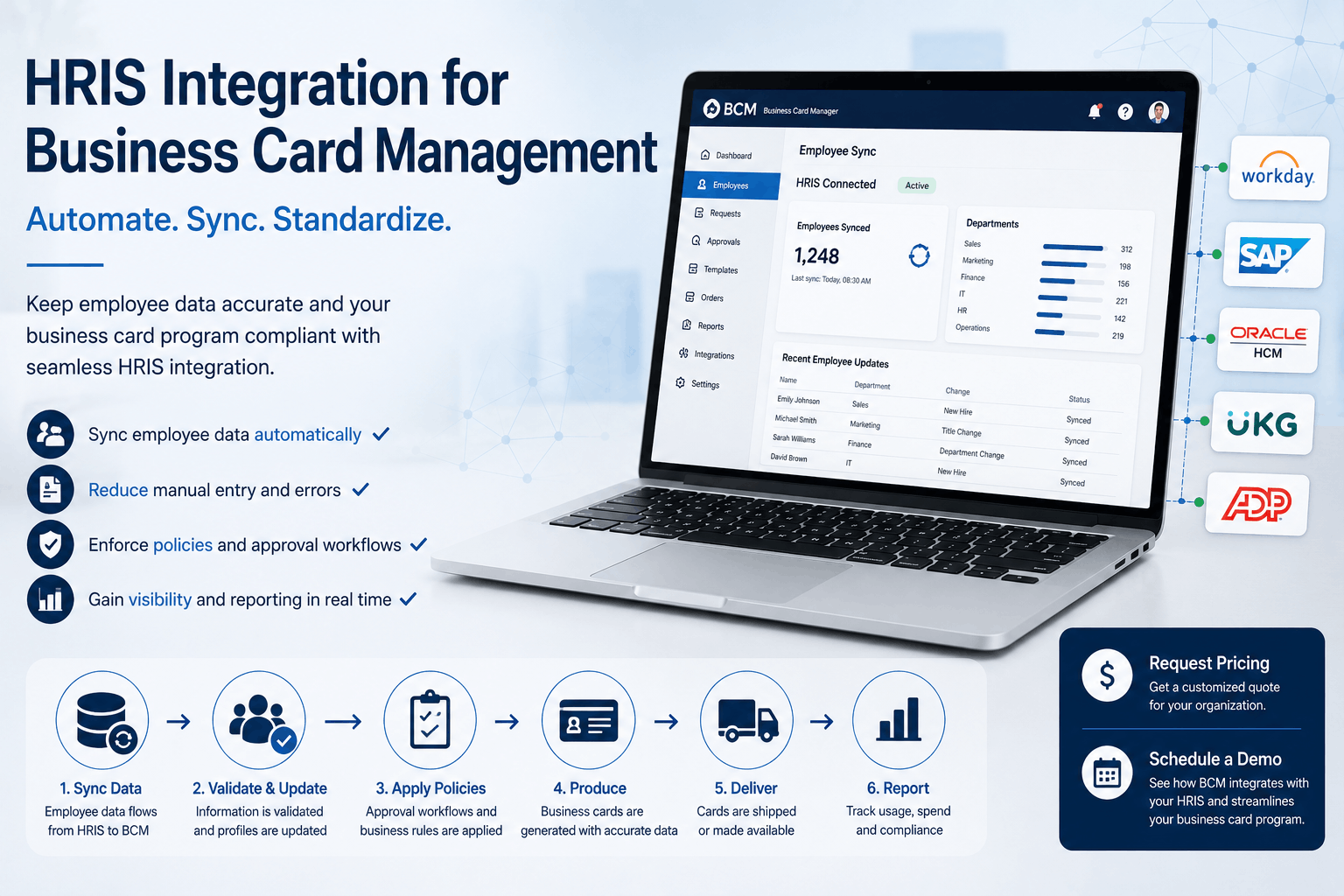
HRIS integration business cards workflows are becoming increasingly important for enterprise organizations that want to automate onboarding, improve operational consistency, and reduce manual administrative processes. Without integration between HR systems and business card ordering platforms, organizations often rely on disconnected workflows, manual data entry, and delayed approval coordination.
Modern enterprise environments require centralized systems that synchronize employee data, automate approvals, and standardize ordering processes across departments and locations. HRIS integrations help enterprises create scalable operational workflows while improving governance and procurement visibility.
Why HRIS Integrations Matter
Enterprise organizations manage large volumes of employee onboarding, role changes, and department transitions. Manual ordering processes frequently create delays, inconsistencies, and administrative overhead.
When business card management systems integrate directly with HRIS platforms, organizations can automate employee data synchronization and streamline ordering workflows. This reduces operational friction while improving execution speed and governance control.
The Problems With Manual Employee Data Management

Without HRIS integrations, business card ordering workflows often depend on manual coordination between HR teams, managers, procurement teams, and vendors.
Common operational challenges include:
• Manual employee data entry
• Delayed onboarding workflows
• Incorrect employee information
• Inconsistent approval routing
• Procurement visibility gaps
• Duplicate administrative work
• Brand inconsistency across teams
• Limited operational reporting
As organizations scale, these inefficiencies become more difficult to manage across multiple departments and locations.
How HRIS Integration Improves Business Card Workflows
HRIS integrations help enterprises automate operational execution throughout the ordering lifecycle.
Integrated workflows can automatically:
• Synchronize employee records
• Populate ordering templates
• Trigger onboarding workflows
• Route approval requests
• Apply department rules
• Standardize procurement processes
• Maintain organizational consistency
• Reduce administrative workload
This creates a more scalable and efficient operational environment.
Enterprise Systems Commonly Connected Through Integrations
Modern enterprise organizations often require integrations across multiple operational platforms.
Common integration environments include:
• Workday
• SAP SuccessFactors
• Oracle HCM
• BambooHR
• Microsoft Dynamics
• Salesforce
• ERP procurement systems
• Internal identity infrastructure
The goal is to create centralized workflow execution while reducing disconnected operational processes.
How BCM Supports HRIS Integration Workflows
BCM provides enterprise integration capabilities designed to support centralized workflow execution and operational governance. Instead of relying on disconnected ordering processes, BCM connects employee data workflows with approval systems, templates, procurement controls, and fulfillment operations.
BCM enables organizations to:
• Automate onboarding workflows
• Synchronize employee information
• Standardize approval routing
• Improve procurement visibility
• Maintain template governance
• Reduce manual operational workload
• Scale workflows across departments and regions
Key Capabilities Enterprises Should Prioritize
When evaluating HRIS integration business card platforms, enterprises should focus on integration architecture and workflow scalability.
Important evaluation criteria include:
1. Real-Time Data Synchronization
Systems should automatically update employee information.
2. Workflow Automation
Approval routing and onboarding processes should operate without manual coordination.
3. Role-Based Governance
Administrative controls help maintain operational consistency.
4. Procurement Visibility
Organizations need reporting and purchasing oversight.
5. Multi-System Connectivity
Enterprise platforms should integrate across HRIS, CRM, ERP, and identity infrastructure.
How Integrations Improve Governance
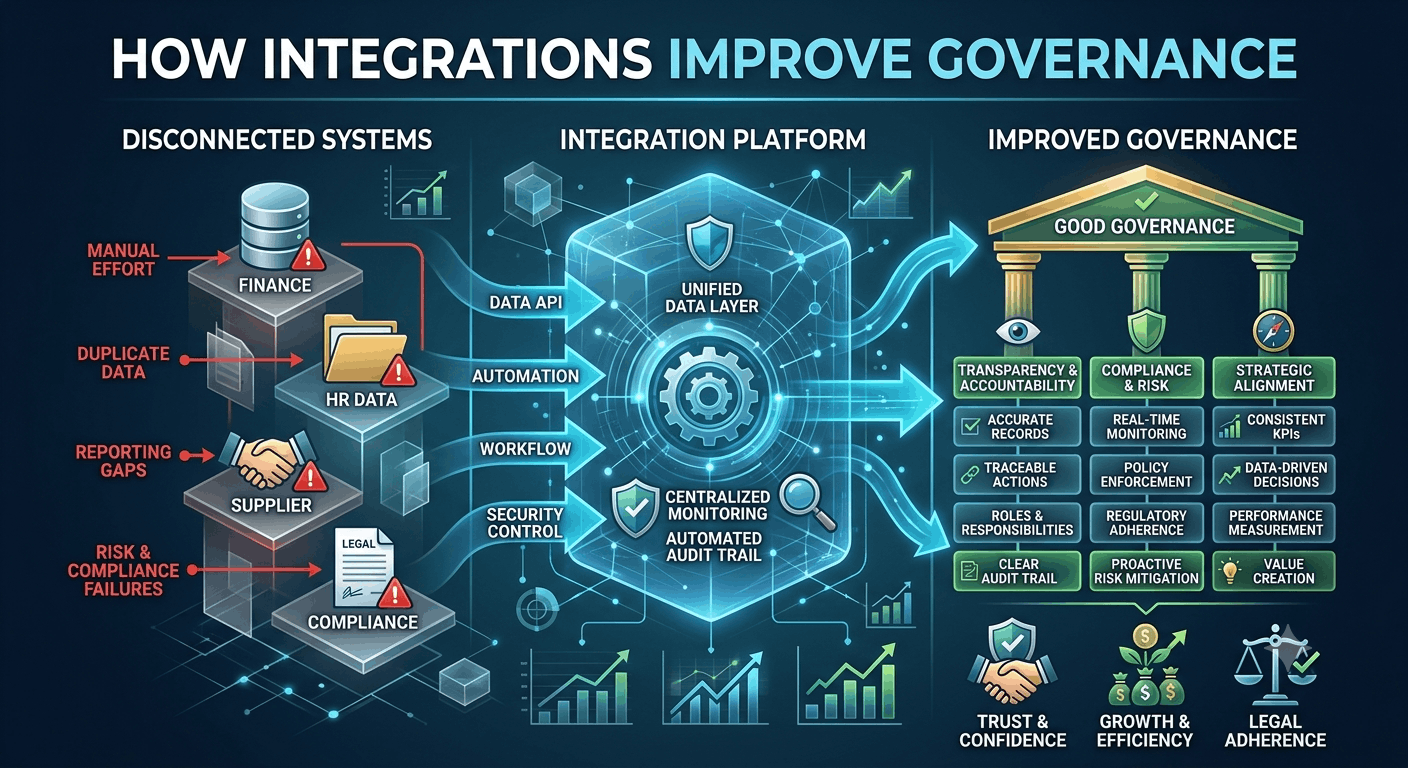
Integrated enterprise workflows improve governance by reducing inconsistent processes and improving operational visibility.
Organizations can:
• Standardize onboarding execution
• Enforce approval policies
• Improve audit reporting
• Centralize operational visibility
• Reduce unauthorized ordering
• Improve procurement accountability
This helps enterprises maintain operational control while scaling workflows more efficiently.
Decision Criteria for Enterprise Buyers
Before selecting an integrated business card management platform, enterprise buyers should evaluate:
• Integration flexibility
• HRIS compatibility
• Approval workflow configuration
• Reporting capabilities
• Procurement controls
• Administrative governance
• Multi-location scalability
• Security and permissions management
The right platform should support long-term operational scalability while reducing manual coordination.
Conclusion
HRIS integration business cards workflows help enterprise organizations automate onboarding, improve governance, and standardize operational execution across departments. Manual processes frequently create delays, inconsistencies, and administrative inefficiencies that become more difficult to manage as organizations grow.
BCM provides enterprise integration capabilities designed to centralize workflows, automate approvals, and improve operational visibility through a scalable business card management infrastructure.