

Coupa Business Card Ordering Integration For Spend Visibility and Approval Control
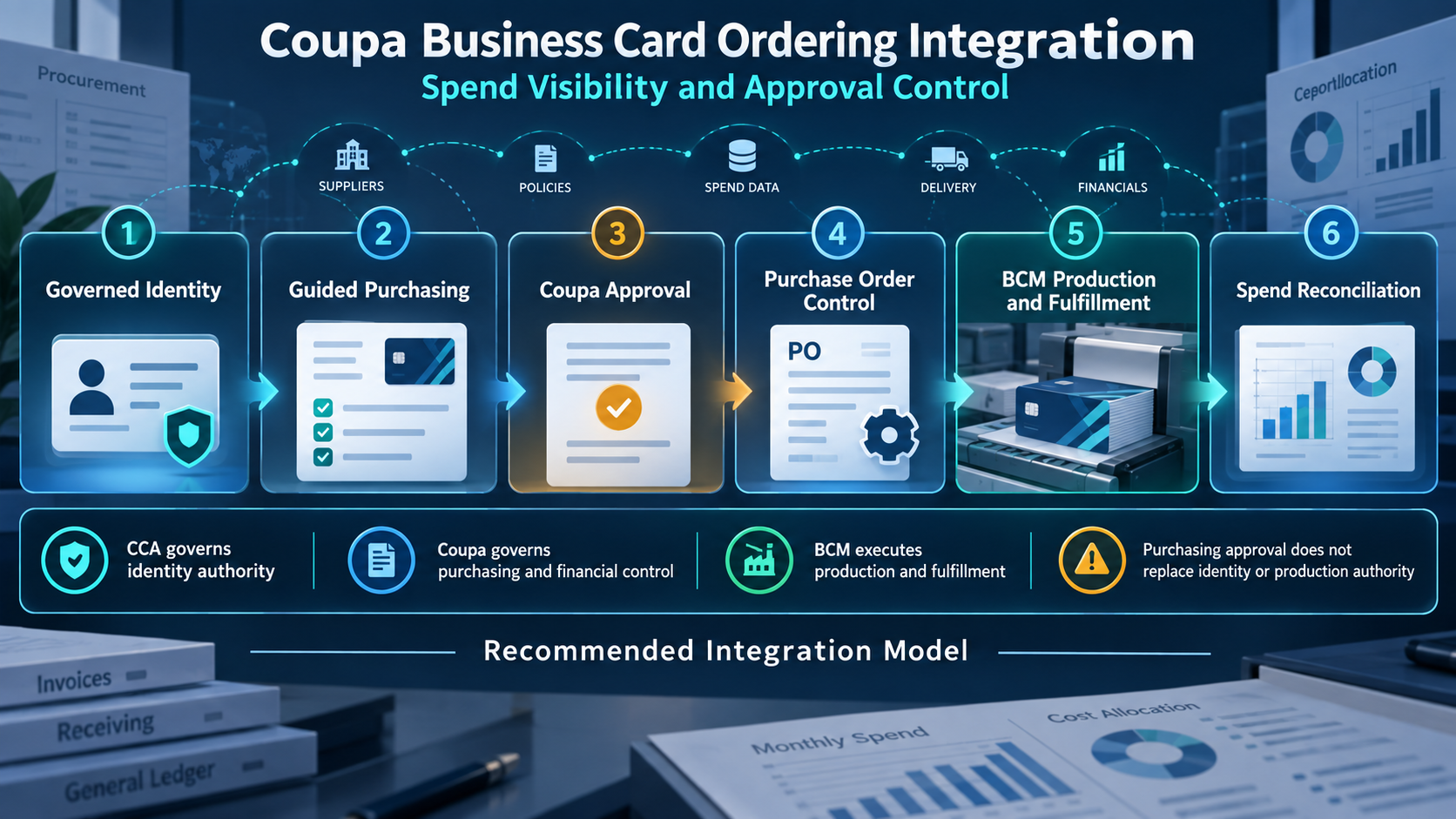
A governed integration model for employee demand, purchasing authority, supplier execution, and financial evidence.
| Coupa can govern guided purchasing, requisitions, approvals, purchase orders, suppliers, receipts, invoices, and spend reporting. CCA governs employee identity and presentation. BCM converts the approved identity specification into an order, controls production release, and returns fulfillment evidence. The integration must preserve these authority boundaries while maintaining one traceable transaction. |
Coupa Can Make Business Card Spend Visible Without Weakening Governance
Business card demand is distributed across employees, managers, offices, events, new hires, and regional administrators. The individual transaction may be small, but the combined process can involve many entities, suppliers, cost centers, delivery destinations, currencies, taxes, approvals, receipts, invoices, and reprints. Procurement teams need to see this activity as controlled enterprise spend rather than a set of isolated print purchases.
Coupa can contribute guided purchasing, requisition and approval workflows, purchase orders, supplier records, receipts, invoices, and spend reporting. Business Card Manager (BCM) can convert an authorized identity specification into an executable business card ordering and maintain production and delivery status. Color Card Administrator (CCA), where deployed, remains the authority for employee eligibility, public identity, presentation rules, and exceptions.
A reliable integration keeps these responsibilities separate. Coupa governs purchasing authority and financial evidence. CCA determines who may receive a card and what may appear on it. BCM constructs the order, applies production controls, releases the approved version, and records fulfillment. A Coupa approval can authorize spend, but it should not authorize an employee title or release a production file by itself.
Spend Visibility Begins With a Complete Transaction Chain
Procurement cannot manage business card spend if requisitions, supplier orders, shipments, receipts, invoices, credits, and reprints use unrelated references. Each request needs a stable correlation identifier that follows the transaction from the employee need through identity approval, Coupa purchasing, BCM production, delivery, and financial reconciliation. Consolidated purchase orders can still preserve the employee-level records beneath them.
This chain allows procurement teams to distinguish normal demand from avoidable cost. A repeat order may reflect planned replenishment, a role change, a lost shipment, a quality failure, an incorrect identity source, or an unauthorized quantity. The financial amount alone cannot explain the cause. Coupa spend data becomes more useful when BCM returns operational status, and CCA preserves the identity decision associated with the order.
Guided Purchasing Should Remove Invalid Choices
An employee or delegated requester should not browse every supplier, template, quantity, finish, or shipping method. Entity, brand, country, language, card family, employee eligibility, contract, cost object, delivery need, and service policy should determine the options presented. The requester can then select among valid choices without reinterpreting procurement or identity policy.
BCM can provide the eligible product and production context. CCA can supply the authorized identity version. Coupa can enforce the approved buying channel, supplier, contract, commodity, cost allocation, and approval threshold. The integration should retain the versions and results used at submission so later catalog or policy changes do not rewrite the history of a released transaction.
Approval Control Requires More Than a Monetary Threshold
A monetary threshold may decide who approves spend, but business card risk also depends on employee status, public title, brand, quantity, delivery speed, destination, supplier, and exception type. A low-value request can still create reputational or compliance problems if it uses an unapproved title or obsolete template. A high-value event order may be legitimate when identity, purpose, supplier, and quantity are approved together.
The HCM integration should evaluate the decisions in the correct domains. CCA resolves identity and presentation authority. Coupa applies purchasing and financial approval. BCM confirms that the production order matches the authorized versions and conditions. When a material field changes after approval, the workflow should identify which decisions are affected and request only the necessary reapproval.
A Six-Stage Coupa Integration Workflow
| Stage | Governed action | Required evidence |
|---|---|---|
| 1. Establish demand | Identify employee need, entity, cost object, delivery requirement, catalog scope, and correlation identifier. | Validated business and purchasing context. |
| 2. Authorize identity | CCA validates eligibility, employee facts, presentation rules, timing, and exceptions. | Approved and versioned identity specification. |
| 3. Create Coupa request | Exchange eligible item, quantity, supplier, price basis, currency, delivery, and financial coding. | Requisition linked to identity and BCM request. |
| 4. Complete approval | Coupa applies contract, supplier, cost, tax, threshold, and purchase order policy. | Approved commercial transaction and PO reference. |
| 5. Release and fulfill | BCM freezes the authorized order, releases production, and records acceptance, shipment, and delivery. | Production and fulfillment evidence. |
| 6. Receive and analyze | Return receipt and status data, match invoices, resolve variances, and report spend causes. | Aligned operational and financial records. |
The following is a recommended integration model. It does not claim that BCM offers a released native Coupa connector. Available Coupa APIs, catalog methods, transaction documents, authentication, permissions, licenses, supplier capabilities, regional requirements, and the configured BCM and CCA architecture must be confirmed before implementation.
Catalog and Contract Data Need Clear Ownership
A business card provisioning catalog item can represent a controlled combination of template, brand, language, material, finish, quantity, supplier capability, price basis, currency, tax treatment, and delivery method. Coupa may own the purchasing representation and contract relationship, while BCM owns production compatibility and CCA owns the presentation rules. The same field should not be independently maintained in several systems without an owner and synchronization rule.
Validity dates and stable identifiers matter when prices, contracts, suppliers, templates, or specifications change. New requests should use the current approved combination. Pending requests should be revalidated when a material dependency changes. Released orders should retain the earlier approved versions, even if the catalog now shows a replacement item.
Purchase Orders Must Preserve Employee Level Evidence
Organizations may create a purchase order for each request, consolidate orders by supplier or period, use a blanket purchase order, or buy under a catalog contract. The purchasing model should match company policy, but every employee order still needs its own identity version, catalog item, quantity, delivery address, BCM order reference, supplier status, cancellation history, and reconciliation result.
BCM should record the Coupa purchase order or contract reference before production release when policy requires it. Coupa should receive enough BCM status to support receiving and financial control. A consolidated purchase order should never make it impossible to identify which employee order failed, shipped late, changed, was credited, or required a reprint.
Supplier Execution Must Remain Connected to Purchasing Authority
Coupa may identify the contracted supplier, but BCM must also confirm that the supplier can produce the approved card for the required country, language, material, finish, quantity, and delivery commitment. Supplier eligibility can change because a contract expires, capacity is unavailable, a region changes, or a production capability is withdrawn.
If the preferred supplier rejects the order, the workflow should revalidate price, tax, currency, shipping, service level, production compatibility, and approval before selecting a backup route. Silent substitution can create an invoice that appears valid in Coupa while the physical card differs from the authorized specification. The rejection and rerouting decision should remain part of the same audit trail.
Operational Status Should Improve Spend Analysis
Procurement reporting improves when it includes meaningful business events rather than a single completed flag. Relevant events can include request created, identity approved, requisition submitted, approval pending, purchase order issued, supplier accepted, production released, shipped, delivered, partially delivered, cancelled, credited, and reprinted. Each event should use a stable transaction reference and source timestamp.
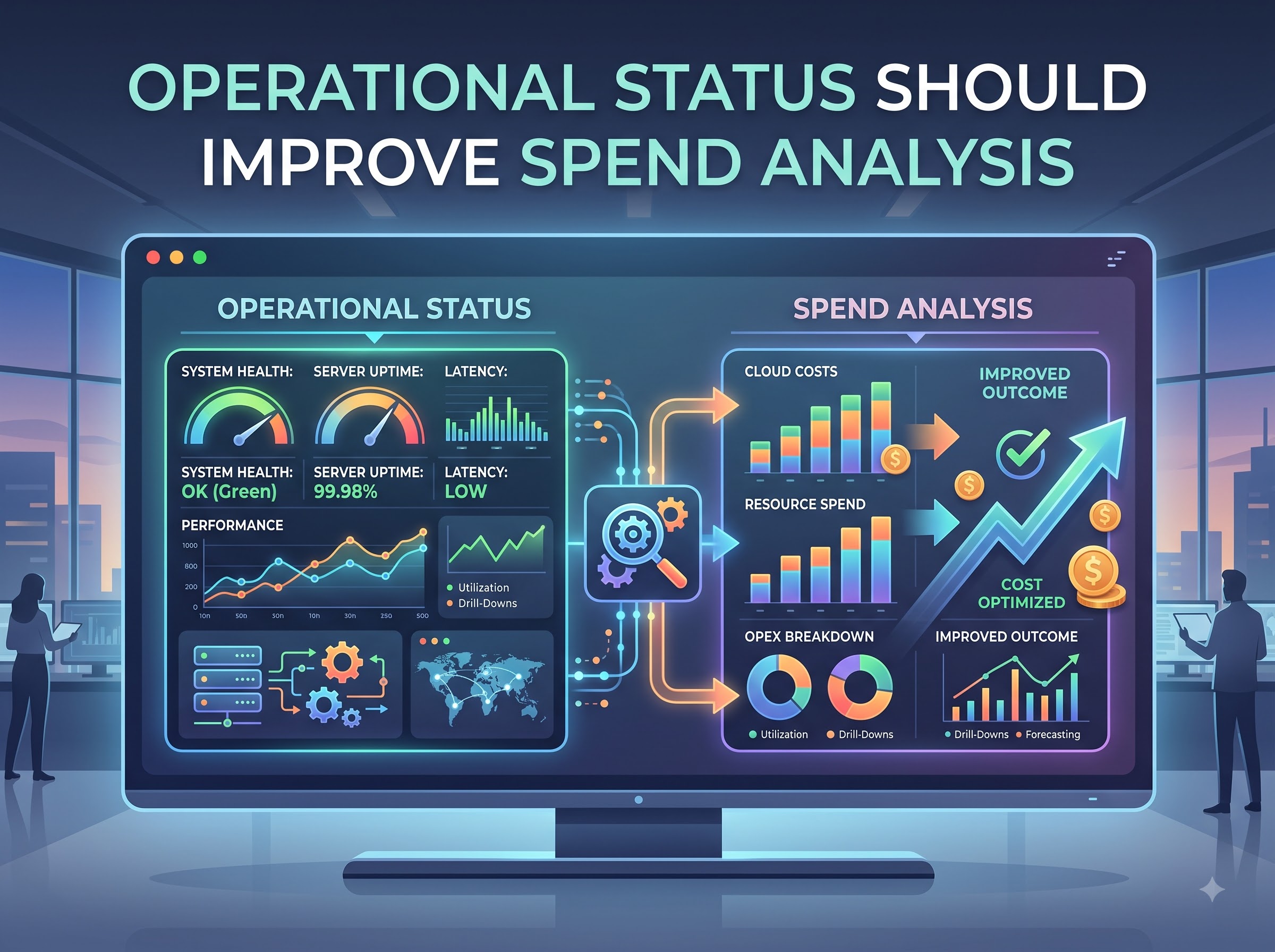
The event design must also handle duplicate and delayed messages. API retries should not create duplicate requisitions or orders. A late shipment event should not reopen a delivered transaction. State validation, idempotency controls, sequence rules, and exception queues help Coupa and BCM maintain an agreed record while preserving discrepancies for investigation.
Receipts and Invoices Must Reflect the Delivered Outcome
A supplier invoice does not prove that the cards were delivered, and a carrier scan does not prove that the invoice is correct. The organization should define whether receipt occurs at shipment, carrier delivery, local acknowledgement, or another control point. Partial shipments, multiple addresses, failed delivery, cancellation, credits, and reprints need explicit receiving rules.
Invoice reconciliation should compare the approved item, quantity, price basis, currency, tax, shipping, purchase order, receipt, credits, and reprint treatment. BCM can return the production and delivery evidence needed for that comparison. Coupa can then route price, quantity, receipt, tax, or duplicate-invoice variances to the appropriate owner without exposing unnecessary employee identity data.
Spend Metrics Need Operational Explanations
Useful measures include catalog adoption, contracted-supplier use, touchless processing, approval time, production lead time, delivery performance, rush orders, supplier rejection, cancellation, price variance, missing receipts, credits, and reprints. Enterprise procurement governance teams should be able to filter these measures by entity, region, supplier, card family, cost object, requester role, and exception cause.
The analysis should separate legitimate demand from process failure. Higher spend may follow growth, new locations, acquisitions, events, or onboarding. Avoidable spend may come from duplicate orders, incorrect source data, obsolete templates, poor delivery, supplier defects, unnecessary rush service, or uncontrolled reorders. Connecting Coupa financial records to BCM operational evidence helps the correct owner act on the actual cause.
Buyer Intent Bridge for Coupa Integration
Procurement teams evaluating a business card platform should ask how it exchanges catalogs, requisitions, approvals, purchase orders, suppliers, receipts, invoices, credits, and order status with Coupa. They should verify transaction correlation, consolidated purchasing, duplicate prevention, supplier substitution, regional controls, exception handling, and the level of operational evidence available for spend analysis.
The evaluation should also test the authority boundary. CCA should govern eligibility and public identity. BCM should construct and release the approved production order. Coupa should govern purchasing policy and financial records. Buyers should request a field-level data map, event model, security design, retention policy, recovery process, and proof that Coupa approval cannot overwrite identity or production controls.
Implementation Priorities
Begin with one entity, employee population, standard card family, Coupa buying channel, contracted supplier, currency, cost allocation pattern, and purchase order model. Define system ownership, stable identifiers, catalog mappings, approval states, production release conditions, status events, receipt rules, invoice references, access controls, logging, retention, and exception ownership.
Test new hires, title and location changes, invalid cost objects, expired catalog items, high quantities, rejected approvals, purchase order delays, supplier substitution, duplicate events, partial shipments, delivery failures, cancellations, credits, reprints, and changes before and after release. Expand only after both standard and exception paths produce traceable commercial and operational governance evidence.
Frequently Asked Questions
Can Coupa initiate a governed business card order
Yes, a configured integration can use a Coupa catalog or requisition to initiate the purchasing request. CCA must still authorize the employee identity, and BCM must build and release the matching production order.
Does Coupa approval authorize business card production
Not by itself. Coupa can authorize the purchase, but BCM should release production only when identity, catalog, supplier, timing, delivery, and commercial conditions are valid for the same order version.
How does Coupa improve business card spend visibility
Coupa can consolidate purchasing and financial records. The analysis becomes more useful when BCM returns production, delivery, cancellation, credit, and reprint events that explain the cost and outcome of each transaction.
Does BCM provide a native Coupa connector?
This article describes a recommended integration model, not a claim of a released native connector. Feasibility depends on Coupa interfaces, authentication, permissions, licenses, transaction methods, supplier capabilities, and the configured BCM and CCA environment.
Connect Coupa Spend Control to Governed Business Card Ordering
A well-defined integration gives procurement teams spend visibility and approval control while preserving identity and production authority. Coupa manages purchasing and financial records. CCA authorizes employee enterprise identity and presentation. BCM converts the approved specification into an order, controls production, and returns fulfillment evidence for reconciliation.
| Connect Coupa Spend Control to Governed Business Card Ordering
Explore how Business Card Manager can connect approved identity to Coupa guided purchasing, approvals, purchase orders, suppliers, fulfillment, and spend analysis. Request an enterprise integration discussion at https://www.businesscardmanager.com/ |